Make-good and reinstatement clauses in Dubai office leases
A reinstatement clause says what condition you must hand your office back in when the lease ends. Read it before you design, because it decides what your fit-out will cost to remove as well as to build.
· 6 min read
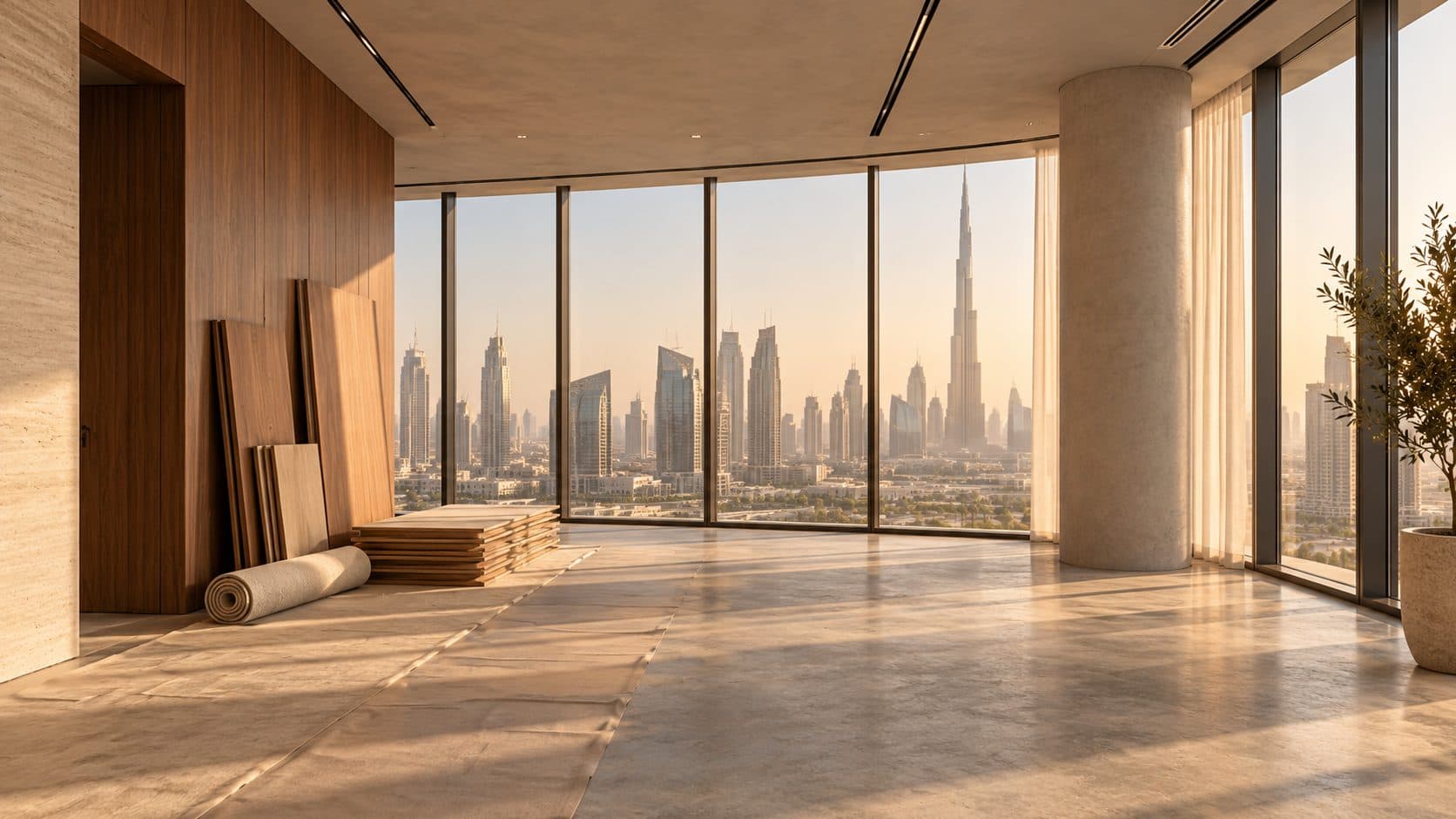
Illustration generated with AI. Not a POA project.
A make-good or reinstatement clause sets the condition in which a tenant must return an office at the end of the lease. In many Dubai leases that means removing the tenant’s fit-out — partitions, joinery, cabling, signage — and restoring the floor to the condition it was handed over in. The clause matters from the first day of design, because it decides what your fit-out will cost to remove as well as to build.
Read early, the clause becomes a design brief: it shows which parts of the office are worth fixing to the building and which should move with you.
What “make good” and “reinstatement” mean
The two terms are often used together, and in practice they describe the same obligation: at the end of the term, the tenant puts the premises back. What “back” means depends entirely on the wording of your lease.
Typical obligations include:
- removing partitions, glazed screens and doors the tenant installed
- removing fixed joinery, raised feature ceilings, wall cladding and floor finishes
- taking out data cabling, extra power circuits and any equipment connected to the building’s systems
- removing signage and reinstating any branded surfaces
- repairing damage — fixings in walls, cut ceiling tiles, stained floors — and repainting
- returning air-conditioning and fire services to a layout that suits an open floor
Some leases ask for all of this. Others only require the space to be returned clean, safe and in good repair, with fair wear and tear allowed. The difference between the two can be the difference between a weekend of cleaning and a month of strip-out.
The baseline: what condition you return to
The single most important phrase in the clause is the condition it refers back to. Leases tend to use one of three:
- Shell and core. Bare structure and building services, with nothing of the tenant’s left.
- The original handover condition. Whatever the landlord delivered — often a Category A fit-out with ceilings, lighting and raised floors.
- Good and tenantable condition. A looser standard that may allow the fit-out to stay if it is sound.
These are not interchangeable. If you took a Category A floor and the lease asks for shell and core at exit, you may have to remove things the landlord built. Our guide to shell and core, Category A and Category B explains what each one usually includes.
The way to remove doubt is a schedule of condition on the day you take the keys: dated photographs and the landlord’s handover drawings, agreed in writing.
Where the obligation is written
The binding obligation is in the lease, but it is often spread across several documents:
- the reinstatement or yield-up clause in the lease itself
- addenda or side letters agreed during negotiation
- the building’s fit-out guide, which may describe how reinstatement works were to be carried out and approved
- the landlord’s no-objection letter for your original fit-out, which sometimes attaches conditions to specific items
Read them together. Our guide to reading a building’s fit-out guide before you sign covers that document in detail. Commercial leases in Dubai are negotiated rather than standard, so the wording of your own lease is what counts — for an interpretation of a specific clause, ask a UAE real estate lawyer.
How reinstatement shapes the fit-out you build
A strict reinstatement clause does not mean a plain office. It means spending where the money stays with you.
- Fixed versus freestanding. Built-in joinery, fixed partitions and bespoke ceilings are paid for twice: once to build, once to remove. Freestanding bespoke furniture — storage, desks, a reception counter designed to be lifted out — moves with you to the next office.
- Demountable partitions. Systems designed to be taken apart can be removed faster and with less damage than built-in drywall, and some can be reused.
- Fixings and finishes. Wall finishes that can be removed cleanly, and floor finishes laid over rather than bonded to the landlord’s floor, reduce repair work at exit.
- Services kept simple. The more the air-conditioning, sprinklers and lighting are rearranged, the more has to be put back.
None of this has to show. An office like this walnut and bronze-glass design reads as permanent, but panels, screens and furniture can be specified with removal in mind. We plan for the end of the lease as part of every office fit-out in Dubai.
What to negotiate before you sign
Reinstatement terms are commercial, and they are easiest to change before the lease is signed. Points worth raising with the landlord:
- The baseline. Ask for the return condition to be the condition actually handed over, recorded in a schedule.
- The right to leave items. Landlords sometimes prefer to keep a good fit-out for the next tenant — meeting rooms, a pantry, a reception. Agree in writing which items may stay.
- A landlord’s election. Some leases let the landlord decide, near the end, what must be removed. Ask for a notice deadline so the decision does not arrive in the final weeks.
- A cash alternative. Some landlords accept a payment instead of physical works. It is worth knowing whether that option exists.
- Approval of your fit-out. Where the landlord approves your design, ask whether approved items are excluded from reinstatement.
Get every agreement in writing, attached to the lease.
Planning the exit
When the lease is ending, reinstatement is a small fit-out project in reverse. It usually needs a contractor, landlord approval, building access permits and, where fire or life-safety systems are altered, the relevant authority’s sign-off — confirm with building management what applies to your building.
The order that tends to work:
- Read the clause and any addenda, and confirm the required condition with the landlord in writing.
- Walk the space with the landlord or building management and agree a scope.
- Price the works and fit them into the programme for your move.
- Complete the works and the cleaning before the lease end date, not after.
- Inspect with the landlord, agree the final condition in writing, and request the deposit.
Reinstatement often happens at the same time as fitting out the new office, so it belongs in the same plan. Our office move checklist shows where it sits in the six months before a move, and our fit-out timeline covers the new space.
If you are about to sign a lease and want to understand what its reinstatement terms mean for the design, we can read it alongside a test fit of the floor. Tell us about your space.
Frequently asked questions
Do I have to remove my office fit-out at the end of a lease in Dubai?
Only if your lease says so, but many Dubai office leases do require the tenant to remove its fit-out and return the floor to the condition it was handed over in. Read the reinstatement clause, any addenda and the building’s fit-out guide together, and confirm the required condition with the landlord in writing.
What is the difference between shell and core reinstatement and original condition?
Shell and core means bare structure and building services, with everything else removed. Original condition means the state the landlord handed over, which is often a Category A fit-out with ceilings and lighting. Which one applies depends on the wording of your lease.
Can I leave my fit-out for the landlord or the next tenant?
Sometimes. Landlords occasionally prefer to keep meeting rooms, a pantry or a reception for the next tenant. Agree in writing which items can stay, ideally when the lease is signed, so the decision does not depend on goodwill at the end.
Is the security deposit linked to reinstatement?
Often, yes. Leases commonly tie the return of the deposit to the condition of the premises at exit. Finish the reinstatement works before the lease end date and agree the final condition with the landlord in writing before handing back the keys.
How can I reduce reinstatement costs before I build?
Negotiate the return condition and the right to leave items before signing, record the handover condition with photographs and drawings, and design with removal in mind: freestanding furniture, demountable partitions and finishes that come away cleanly.