Lacquer, veneer or solid wood: furniture finishes compared
Lacquer gives colour and the toughest, easiest-to-clean surface; clear-finished veneer shows real timber on wide, stable panels; solid wood suits edges and parts that are handled and repaired. Good office furniture uses all three.
· Updated · 7 min read
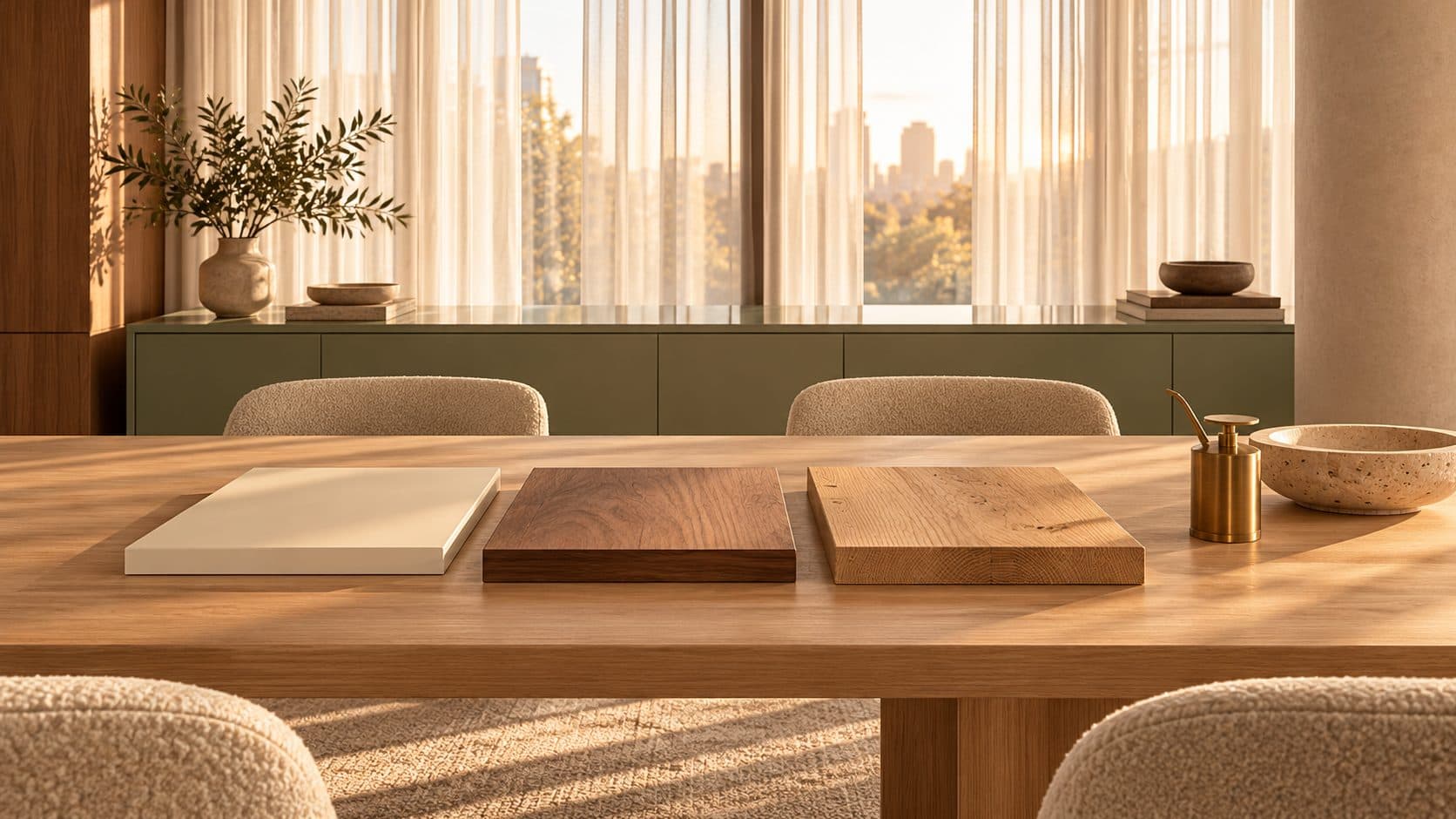
Illustration generated with AI. Not a POA project.
In this article · 9 chapters
- 01Three different things, often compared as one
- 02Lacquer: colour, toughness and an even surface
- 03Clear-finished veneer: real timber on a stable panel
- 04Solid wood: the parts that are touched and repaired
- 05Oil, stain and laminate: the other options
- 06How we combine them on a typical piece
- 07Dubai conditions: sun, air conditioning and cleaning
- 08A short checklist
- 09Frequently asked questions
Choose lacquer where you want a colour or the hardest-wearing, easiest-to-clean surface: counters, storage fronts, pantry joinery. Choose clear-finished veneer where you want real timber on a wide, flat panel: desk tops, table tops, doors and wall panels. Choose solid wood for edges, legs, handles and small tops that are handled every day and may need sanding one day. Most well-made office furniture combines all three.
Three different things, often compared as one
Lacquer, veneer and solid wood are not three versions of the same choice. Solid wood and veneer are ways of building a panel. Lacquer is a finish, and it can go over either. The useful question is which construction and which finish suit each part of a piece: a desk or counter is drawn as a top, an edge, a frame and a set of fronts, and each gets its own answer. Our guide to walnut, oak and ash covers the species; this one covers what goes on top of it.
Lacquer: colour, toughness and an even surface
Lacquer here means a sprayed, pigmented coating on a stable board, finished matte, satin or gloss. It is the finish behind most coloured joinery, from a cream storage wall to a sage credenza or an oxblood reception desk.
- Look. Flat, even colour with no grain. Matte and low-sheen lacquers are the quietest and hide fingerprints best; we rarely use gloss in an office.
- Wear. A properly cured lacquer is hard, resists most cleaning products and wipes clean, which is why we specify it for pantries, reception counters and storage fronts. Chips at edges are the usual damage, more visible on a dark colour.
- Repair. Small chips can be touched in; a badly damaged door is usually resprayed or replaced. Keep the colour reference from the fit-out so later pieces match.
- Where. Anywhere colour is wanted, anywhere cleaning matters, and anywhere a large flat surface would look busy in grain. Our article on choosing colours for an office explains why lacquered joinery is often the best place for the accent colour.
Clear-finished veneer: real timber on a stable panel
Veneer is a thin leaf of real timber bonded to a stable core, then sealed with a clear matte lacquer or, less often, an oil. It is how almost every wide timber surface in a modern office is made.
- Look. Exactly like the timber, because it is the timber. Leaves can be book-matched and run in sequence along a bench or a storage wall, which solid boards cannot do.
- Wear. The clear lacquer does the work: a good matte lacquer on veneer is nearly as hard-wearing as pigmented lacquer and far more resistant to marks than an oiled surface. The weak point is the edge, where a knock can lift the leaf.
- Repair. Light scratches in the lacquer can be refinished; a deep gouge through the leaf cannot be sanded out, so the panel is replaced. This is the honest limit of veneer and the reason edges are usually solid.
- Where. Desk and table tops, doors, wall panelling, long runs of bench desks, and anything that must stay flat across many metres in an air-conditioned room.
Solid wood: the parts that are touched and repaired
Solid timber is best used where its two strengths matter: it can be shaped, and it can be sanded back and refinished more than once.
- Look. Richer at the edge and the end grain than veneer. Movement across a wide solid board shows over time; on a narrow edge or a leg it does not.
- Wear. This depends on species and finish more than on being solid. An oiled solid oak edge marks easily but can be refreshed with a cloth; a lacquered one marks less but shows a chip when it comes.
- Repair. This is the point of solid timber. A dented edge or a scratched top can be sanded and refinished on site.
- Where. Edges of veneered tops, legs and frames, handles, shelf lippings, small side tables, and occasionally a meeting table top where movement is accepted.
Oil, stain and laminate: the other options
Not every surface needs a lacquer, and not every surface needs timber.
- Oil soaks into the timber instead of sitting on it, so it feels like wood and looks matte. It marks more easily and needs re-oiling, so it suits a library table in a quiet private office, not a shared pantry worktop. Hard wax oil gives more protection and is still repairable with a cloth.
- Stain changes the colour of the timber before a clear finish goes on. Smoked and white-pigmented finishes are the ones we use most, to darken oak or keep ash pale.
- Laminate is a printed or plain sheet on a board and the most scratch- and stain-resistant surface of the lot. It belongs in back-of-house areas, print rooms and workstation tops where budget rules. A woodgrain laminate reads as laminate from across a room; a plain colour is more honest. Our materials guide for warm office interiors covers the surfaces that are seen.
How we combine them on a typical piece
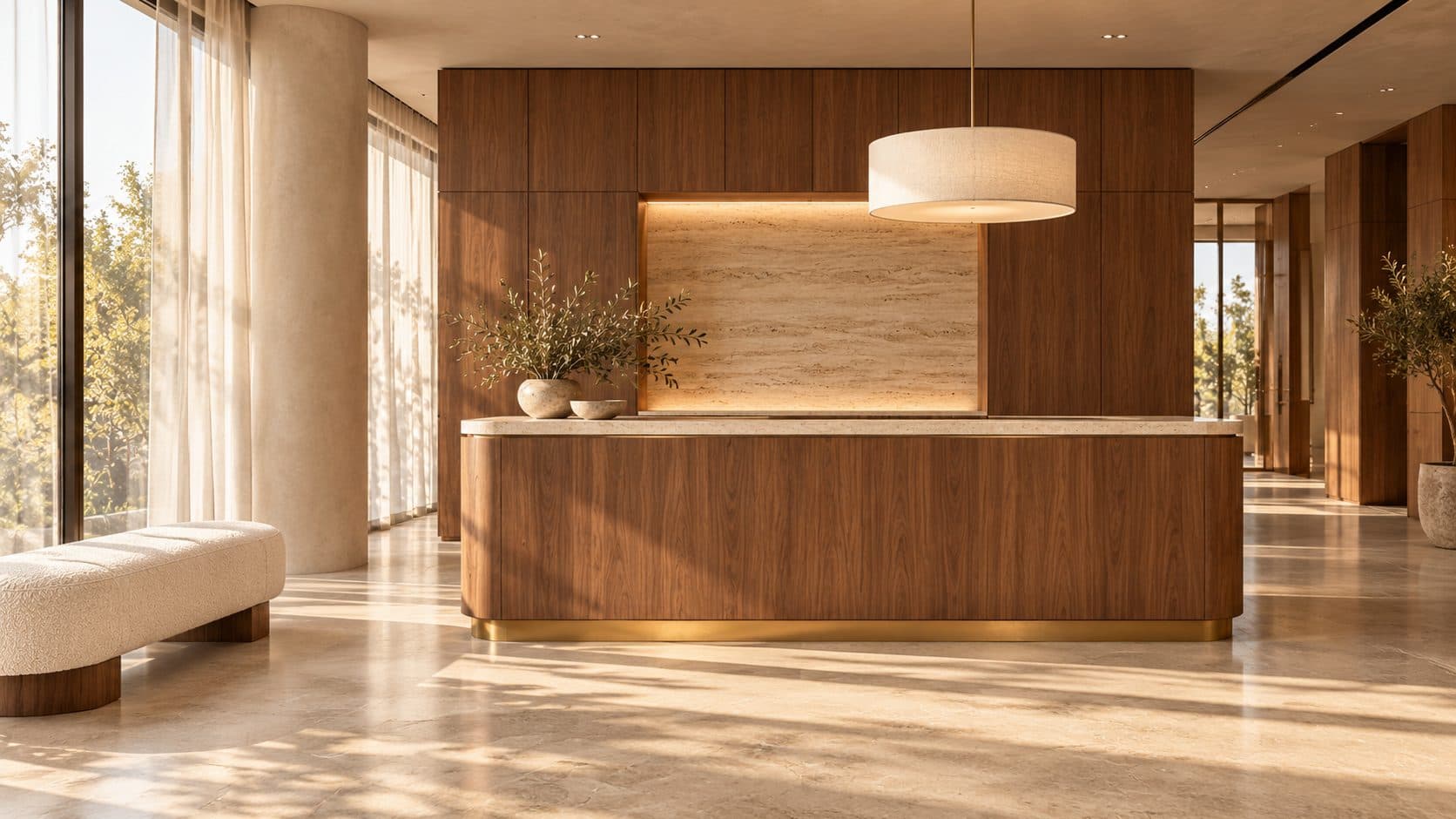
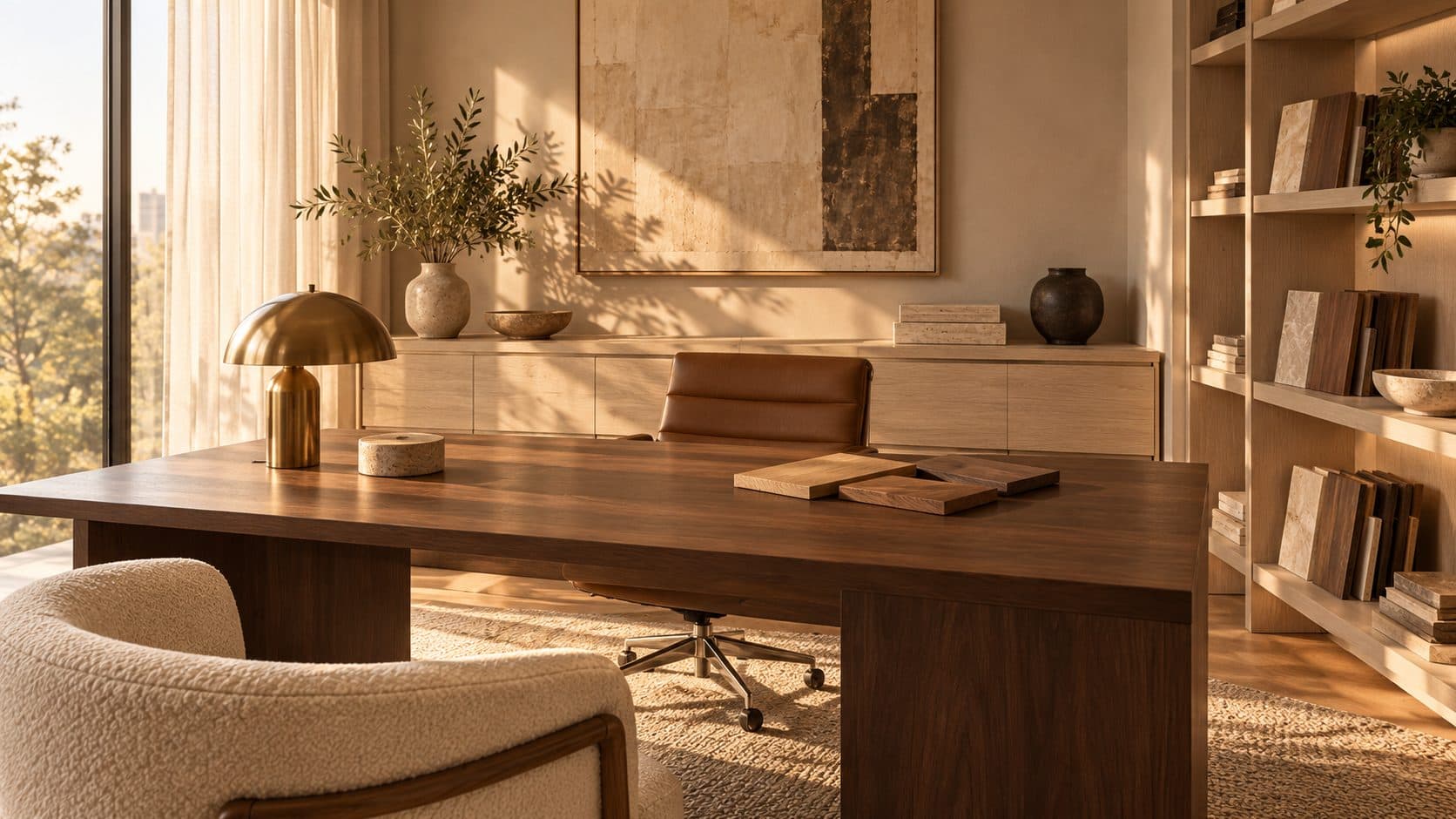
A reception counter is rarely a single material. The front panel is lacquered, because it is what visitors see and what cleaners wipe. The top is veneered with a solid edge in the same species, so it stays flat and the edge can be sanded. The handles are solid timber or brushed metal. A desk follows the same logic: veneered top, solid edge, lacquered or metal frame. Our Bronze Private Office and Terracotta Studio both work this way, with lacquer carrying the colour and veneer the warmth.
This is why we draw every piece of bespoke office furniture as a set of parts rather than choosing one finish for the whole.
A reception counter is the clearest case of this mix, with a stone or timber ledge, a veneered or lacquered front and a metal plinth; we go through those choices in designing a reception counter.
Dubai conditions: sun, air conditioning and cleaning
- Sun fades pigmented lacquer slowly and shifts the colour of clear-finished timber faster. Keep large panels and tops back from unshaded glazing, and plan blinds with the furniture.
- Air conditioning keeps rooms dry and steady. Veneered panels and lacquered boards are the most stable; wide solid tops move most. Solid edges and frames are usually fine.
- Cleaning in a busy office is frequent and not always gentle. Lacquer and laminate tolerate most products; clear-lacquered veneer tolerates mild ones; oiled timber tolerates a damp cloth and little else. Agree the finish with whoever will look after the office, and ask for the care sheet at handover.
A short checklist
- Will it carry colour? Lacquer.
- Is it a wide, flat timber surface? Clear-finished veneer with a solid edge.
- Will it be handled, knocked and one day repaired? Solid wood.
- Is it back of house, or on a tight budget? Laminate, plain rather than woodgrain.
- Is it a quiet room that will be looked after? Oil or hard wax oil.
Storage fronts are where these choices show most, because they are often the largest timber surface in the room; our guide to office storage walls and credenzas covers the doors, shelf bands and credenza tops that each finish suits.
If you are deciding the finishes for a reception, a run of desks or a storage wall, tell us about your space and we will draw the pieces with the interior rather than after it.
Frequently asked questions
Is lacquered furniture durable enough for an office?
Yes, when it is a properly sprayed and cured lacquer on a stable board. It resists cleaning products and daily wiping better than clear-finished timber, which is why it suits reception counters, pantries and storage fronts. Its weak point is chipping at edges, which shows more on dark colours.
Is veneer furniture lower quality than solid wood?
Not for wide, flat surfaces. Veneer on a stable core stays flatter than solid timber in air-conditioned rooms and matches across long runs. Its limit is repair: a deep gouge through the leaf cannot be sanded out, so good pieces protect the veneer with a solid edge.
What is the difference between veneer and laminate?
Veneer is a thin leaf of real timber bonded to a board, so it looks and ages like wood. Laminate is a printed or plain plastic sheet on a board; it is more scratch-resistant and cheaper, but a woodgrain laminate rarely passes for timber in a room meant to feel warm.
Should an office desk top be oiled or lacquered?
Lacquered, in almost every office. A matte clear lacquer protects the timber from pens, cups and cleaning products and still looks natural. Oil feels better to the hand but marks easily and needs re-oiling, so it suits a quiet private office or library table rather than a shared desk.
Can lacquered joinery be repaired if it chips?
Small chips can be touched in on site if the colour reference was kept from the fit-out. A badly damaged door or panel is usually resprayed or replaced, so ask your joiner to record the lacquer colour and sheen at handover.