How to make an office feel warm, not corporate: a materials guide
The difference between an office that feels like a home and one that feels like a lobby is mostly material. A short palette of timber, stone and textile — and the discipline to stick to it — does most of the work.
· Updated · 4 min read
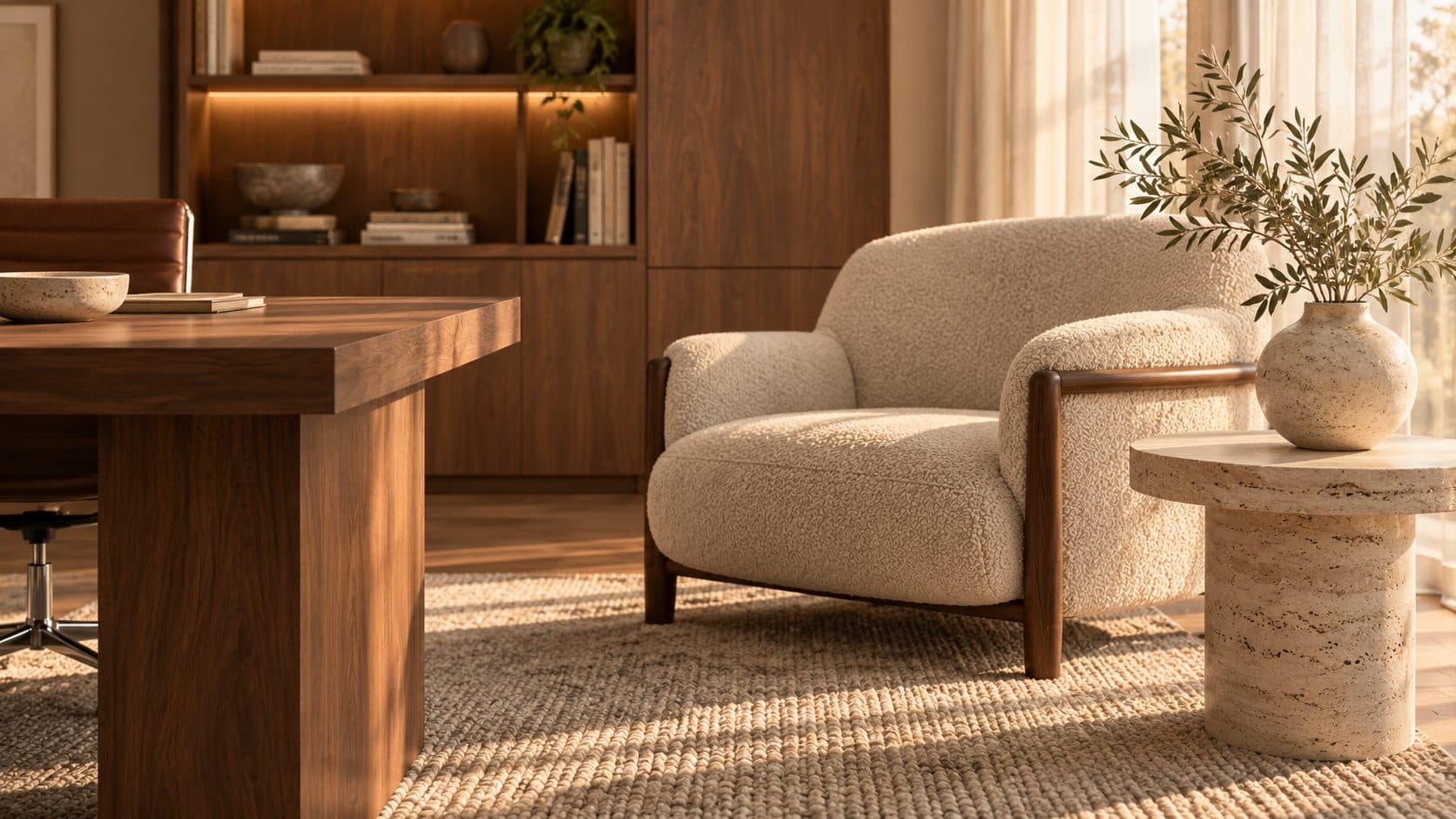
Illustration generated with AI. Not a POA project.
Ask people what they want from a new office and many describe something closer to a good hotel or a friend’s apartment than to a workplace: softer light, nicer things to touch, rooms that are pleasant to be in. That feeling is less about style than about material. This guide covers how we choose and combine materials to get there.
Keep the palette short
The most reliable way to make a space feel calm is to use fewer materials. We usually build a project around three:
- one timber, for joinery, desks and wall panelling
- one stone or stone-like surface, for counters, tables and floors where it will be touched and seen
- one textile family, for upholstery, curtains and rugs
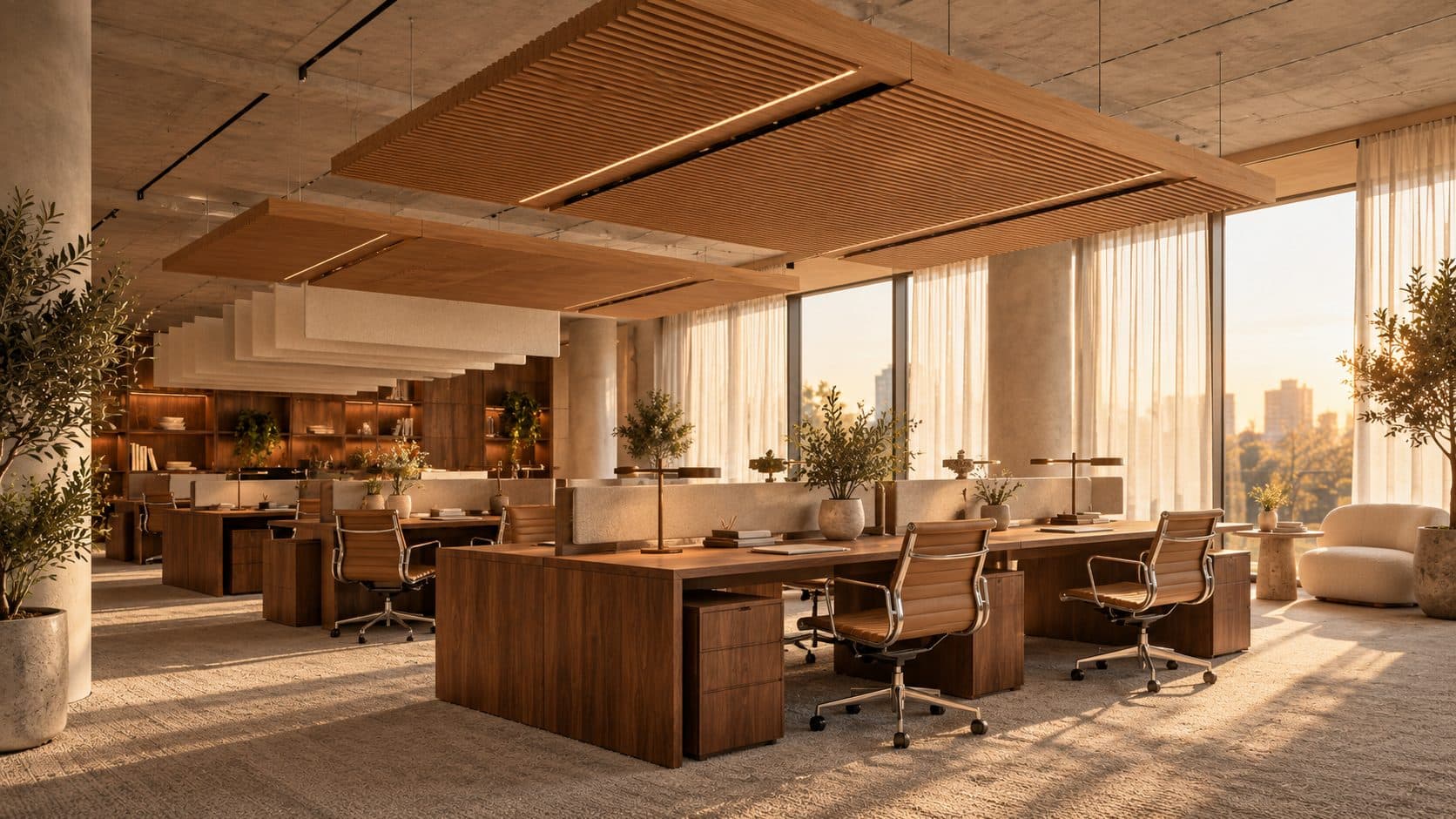
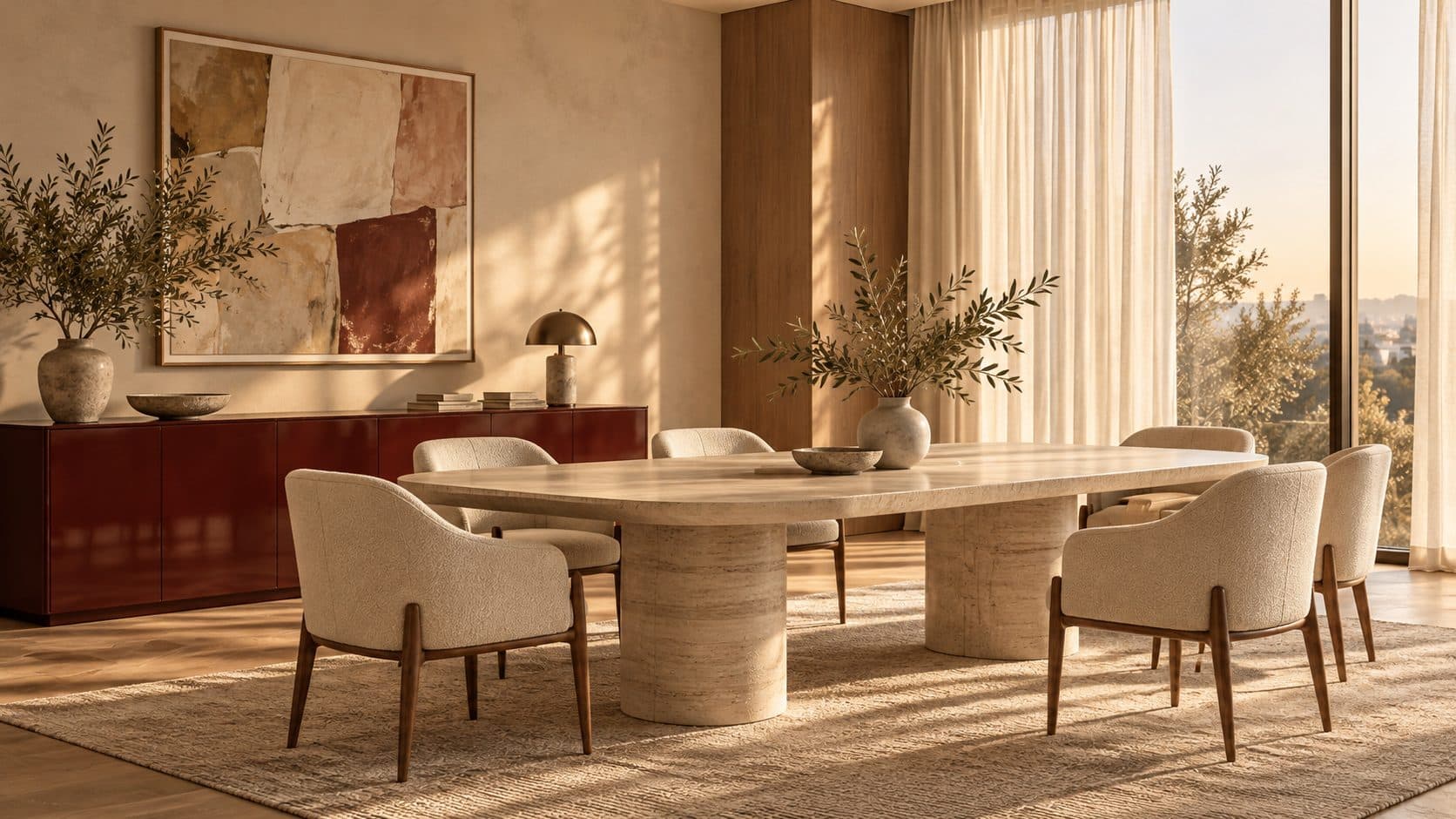
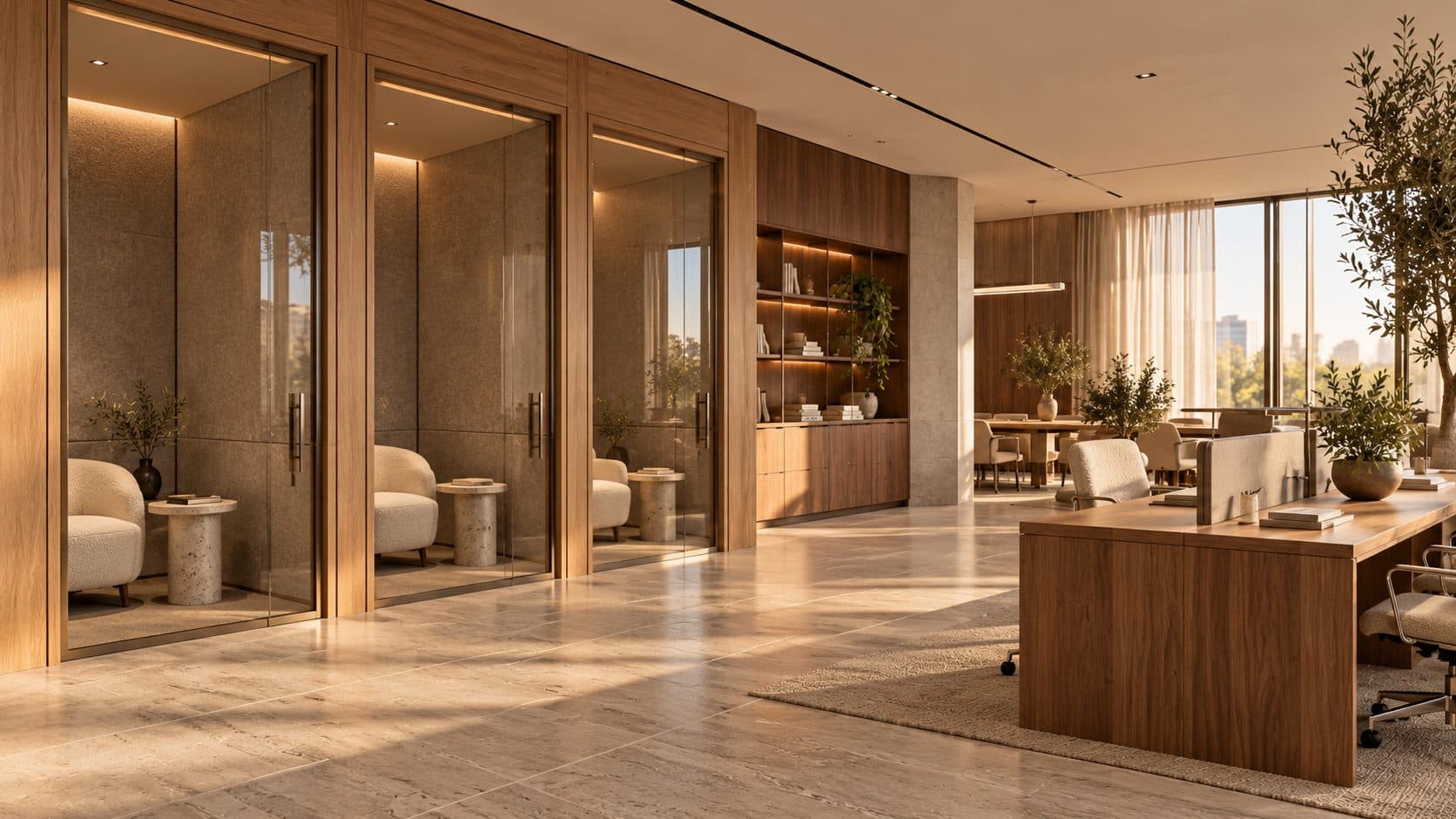
Everything else — metal details, paint colours, the accent — is chosen to support those three. Run the same palette through reception, the boardroom and the pantry, and the office reads as one place instead of a series of rooms designed on different days. Our Walnut Gallery Office is built almost entirely on walnut, cream bouclé and travertine.
Choose timber for the hand, not just the eye
Timber does more than any other material to make an interior feel warm, but finish matters as much as species. Matte and oiled finishes feel natural and age gracefully; high-gloss finishes read as formal and show every fingerprint. Our guide to lacquer, veneer and solid wood finishes explains where each belongs on a desk or counter.
Walnut and darker woods suit executive floors and libraries. Light oak and ash keep open-plan areas bright, which matters on deep floor plates where daylight does not reach the core. Fluting, slatting and solid edges on desks and counters add the kind of detail people notice when they lean on them. On an open floor, a long timber bench reads as one calm surface; our guide to bench desks vs individual desks explains when that choice makes sense.
Use stone where it is touched
Stone carries weight — visually and literally. Travertine, marble and terrazzo work best on surfaces people use: a reception counter, a meeting table, a pantry worktop. Honed finishes are softer and more forgiving than polished ones in a working office.
Textiles do the acoustic work
Hard surfaces make an office loud, and noise is the fastest way to make a space feel institutional. Textiles solve it without looking like acoustic treatment:
- upholstered seating in bouclé, wool or velvet
- full-height curtains, which also soften glass and sun
- large rugs in meeting rooms and lounges
- upholstered or slatted wall panels behind seating
In an open-plan office the ceiling and floor matter even more than the walls; our guide to open-plan office acoustics explains how to plan for quiet before adding any treatment.
Let the accent do one job
A single saturated colour — oxblood, cobalt, terracotta, sage — gives an office its personality. The rule is to use it with intent: one lacquered desk, one fluted wall, one sofa. Our bench desk in six finishes shows how far one colour decision moves the character of a room. For choosing that colour and deciding where it goes, see our guide to choosing colours for an office.
Light it like a home
The same materials look cold under flat, bright ceiling light and warm under layered light. Combine:
- ambient light that is soft and indirect — coves, uplights, light washed across walls
- task light where people work — desk lamps and pendants over tables
- accent light on joinery and art — integrated LED strips in shelving
Warm colour temperatures in lounges and private offices, slightly cooler and brighter over open desks, keep the office comfortable through the day without losing its atmosphere.
Materials and lighting are fixed during the design stage, well before anything is built; our office fit-out timeline shows where those decisions sit in the wider programme.
The feeling you want belongs in the brief from the first meeting; our guide to briefing an office interior designer explains how to put it into words.
The same palette also matters on screen; our guide to designing an executive office for video calls looks at the wall behind the desk, the light on your face and the acoustics of a private office.
The same palette suits meeting rooms, where timber, stone and textile also do acoustic work; our boardroom design guide shows how. The reception is where that palette is seen first, which is why we treat it as the clearest statement of the material story in our guide to office reception design.
Natural materials are also the most durable part of a biophilic scheme; our guide to biophilic office design in Dubai shows how they combine with daylight and a few well-placed plants.
If you are planning an office that should feel like this, we can help from the first sketch to the last cushion. See how we approach office interior design, or start a project.
Frequently asked questions
What materials make an office feel warm?
Timber, natural stone and soft textiles, used in a short palette and lit with warm, layered light. Matte and honed finishes feel warmer than high-gloss ones.
Is real timber practical in a busy office?
Yes, with the right finish. Oiled or lacquered matte timber and solid edges stand up to daily use, and veneers keep large surfaces stable and affordable.
How do you reduce noise in an open-plan office without acoustic panels everywhere?
Use upholstered furniture, rugs, curtains and slatted or fabric-wrapped wall panels behind seating. They absorb sound while reading as part of the interior.
How many colours should an office interior use?
Keep the base to a few natural tones from the main materials and add one accent colour, used deliberately in a few places rather than everywhere.