Biophilic office design in a desert city: plants and materials that last
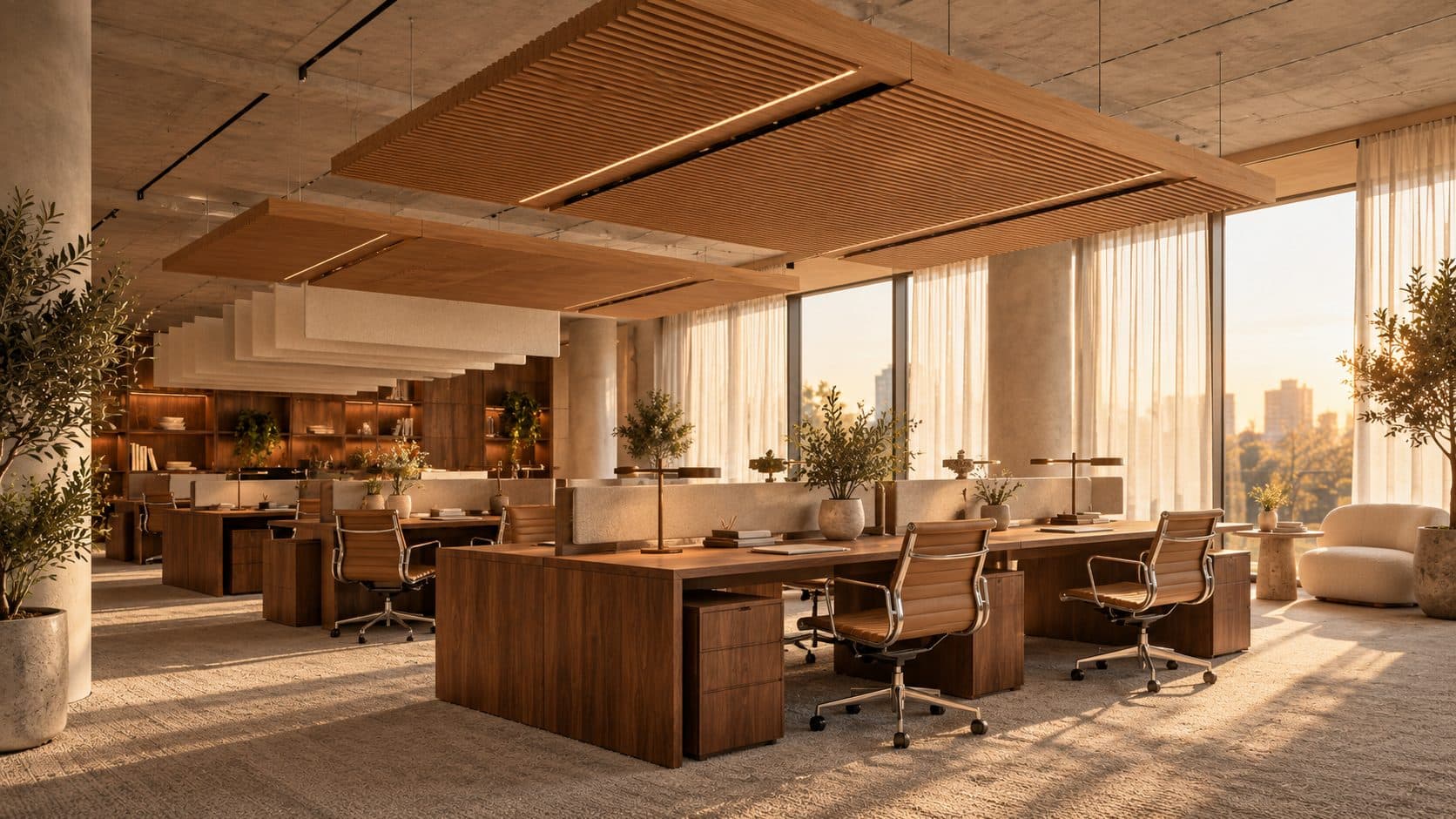
Biophilic design in a Dubai office works when it starts with light, views and natural materials, then adds a few robust plants placed where they can actually survive air-conditioning and low light.
· 6 min read
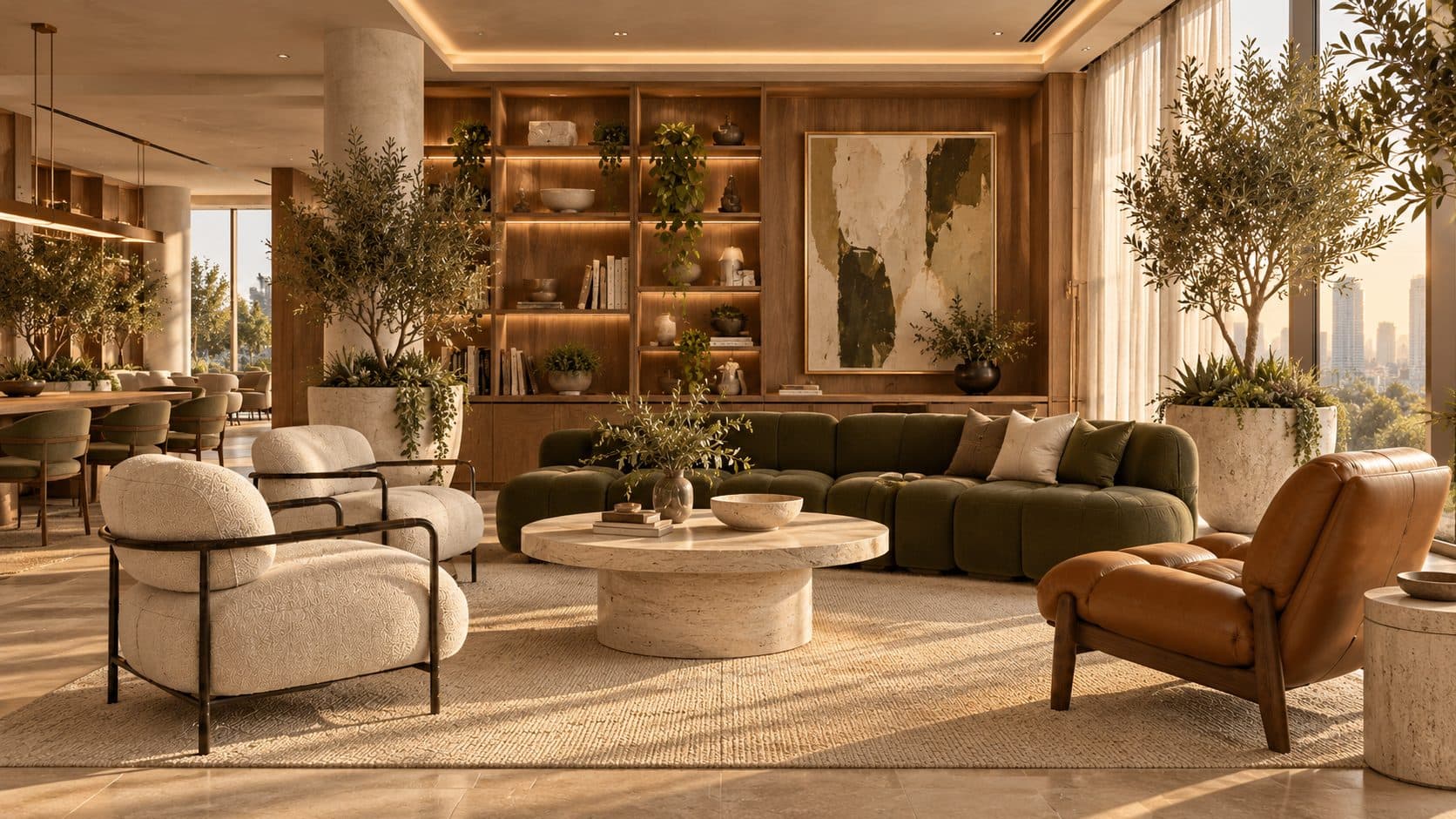
Illustration generated with AI. Not a POA project.
In this article · 9 chapters
- 01What biophilic design actually means in an office
- 02Start with light and views, not pots
- 03Materials that bring nature in permanently
- 04Plants that cope with air-conditioning
- 05Placing plants where they will survive
- 06Preserved moss, replicas and when to use them
- 07Maintenance is part of the design
- 08Bringing it together
- 09Frequently asked questions
Biophilic office design in Dubai is less about filling the floor with plants and more about connecting people to natural light, views, materials and a few living things that can genuinely thrive indoors. Start with daylight and outlook, build the interior from timber, stone and textile, then add a small number of robust plants in large planters, placed where light and maintenance allow.
What biophilic design actually means in an office
Biophilic design is the idea that people feel and work better when their surroundings keep some connection to nature. In an office, that connection comes in three broad forms:
- Direct nature: daylight, views out, plants, fresh air, water.
- Natural materials and patterns: timber grain, stone, wool, linen, clay, and forms that echo the natural world.
- The quality of space: a sense of outlook and refuge, variation in light through the day, places to retreat.
Plants are the most visible part, and often the least durable. The other two are built into the architecture and last as long as the fit-out. In a city where outdoor greenery needs constant irrigation and most office air is conditioned all year, it makes sense to lean on the parts that cannot wilt.
Start with light and views, not pots
The strongest natural element most Dubai offices have is the window. A floor with a long view of the sky, the sea or the city's skyline already offers what biophilic design is trying to provide. The task is to keep that view usable.
That means managing glare so blinds are not closed all day, keeping tall partitions and storage away from the façade, and letting shared spaces such as lounges and breakout areas sit along the glass. Our guide to lighting an office for Dubai's sun covers desk orientation and layered blinds in detail; a well-controlled window does more for a sense of nature than any planting scheme.
For deep floor plates where the core is far from the glass, glazed meeting rooms, lower partitions and clear sightlines across the floor help bring outlook further in.
Materials that bring nature in permanently
Natural materials are the most reliable way to make an office feel connected to the outside. They age well, they do not need watering and they change subtly with the light through the day. The ones we return to most often:
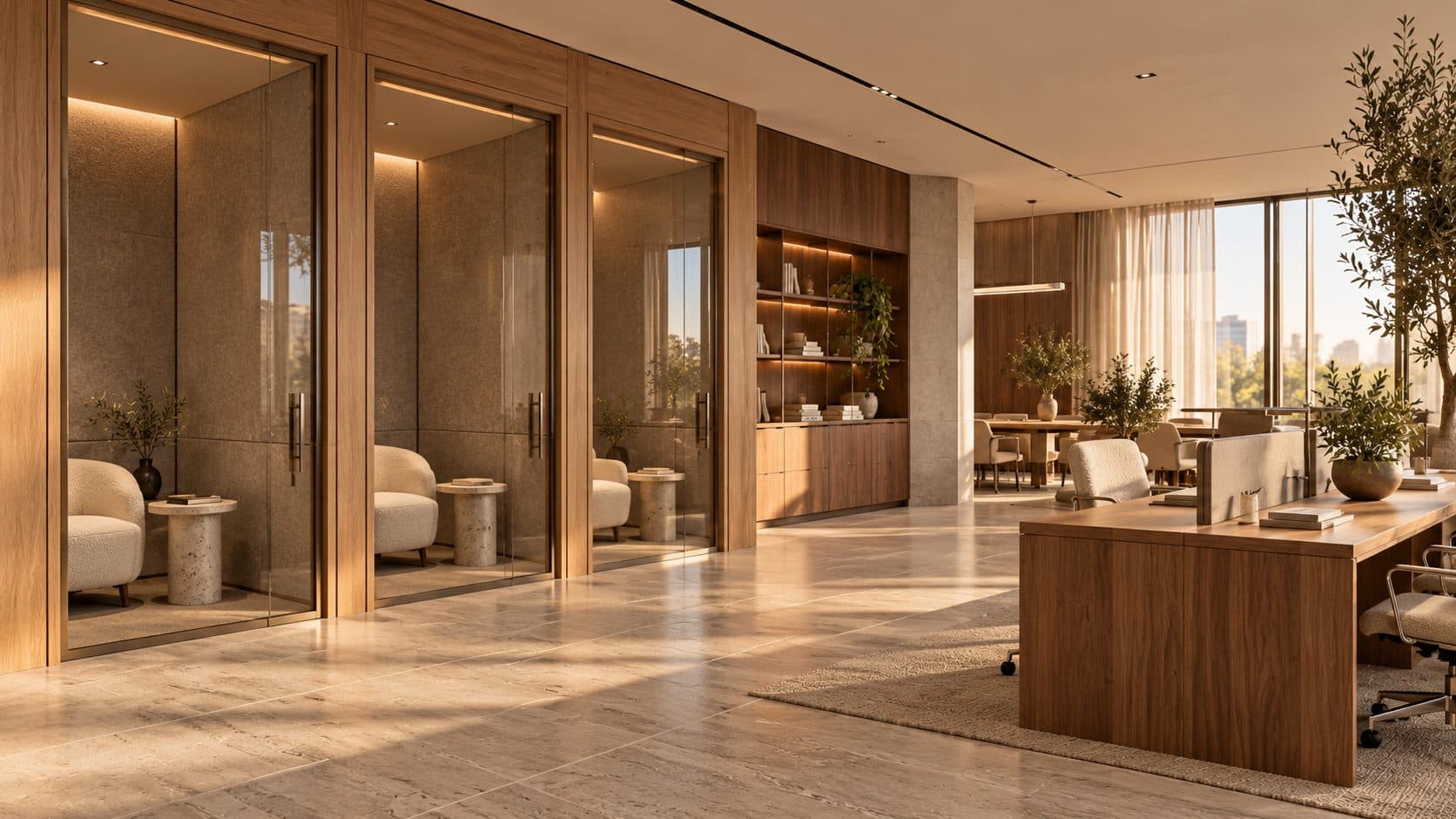
- Timber in joinery, wall panels, doors and desks. Oak and ash read light and calm; walnut reads warmer and more formal.
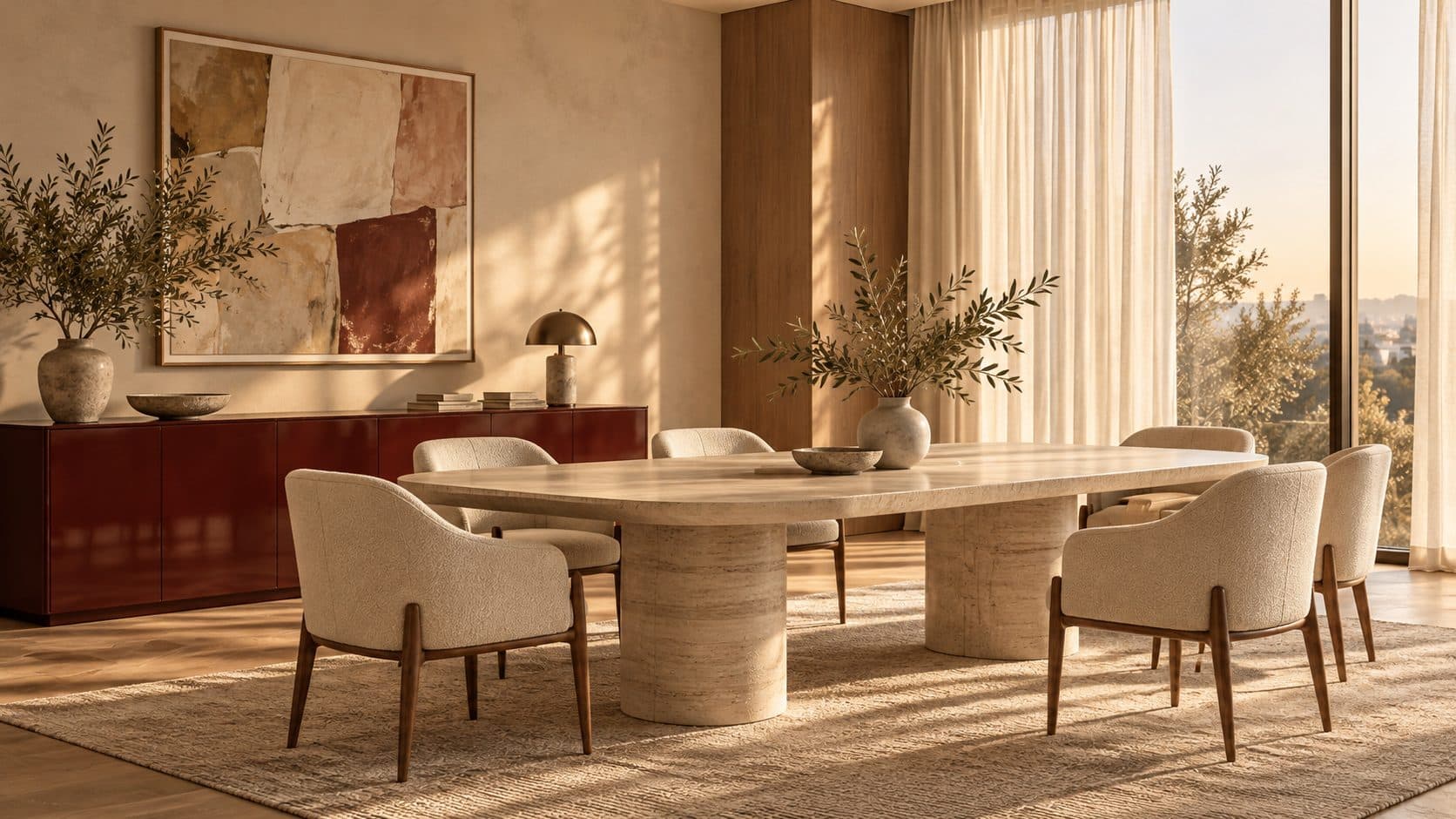
- Stone for counters, tables and feature walls: travertine, limestone and honed marbles with visible texture.
- Textiles such as wool rugs, linen curtains and bouclé upholstery, which also soften acoustics.
- Clay, plaster and terracotta finishes, which pick up the earth tones of the region.
Our article on making an office feel warm with materials goes further into how to combine them. The cover image shows the principle: oak shelving, a stone floor and a sheer curtain do most of the work, and the plants simply finish it.
Plants that cope with air-conditioning
Indoor plants in Dubai face constant air-conditioning, dry air and, away from the façade, low light. Choose species known for tolerating those conditions rather than what looks best in a render. A horticulturist or specialist indoor planting contractor should confirm the final list for your floor, but the plants that usually cope well indoors include:
- Low-light tolerant foliage: ZZ plant, snake plant (sansevieria), cast iron plant (aspidistra) and some philodendrons.
- Trailing plants for shelves: pothos and heartleaf philodendron, as on the shelving in the cover image.
- Larger floor plants near windows: rubber plant (ficus elastica), fiddle-leaf fig and olive trees, which need bright light and suit perimeter zones.
Fewer, larger plants usually look better and survive longer than many small ones. A single tree in a substantial planter has more presence than a row of desk pots, and it is easier to maintain.
Placing plants where they will survive
Plants fail in offices mostly because of where they are put. A few rules help:
- Match plant to light. Put light-hungry species within a few metres of the glass and low-light species towards the core. Avoid placing plants directly under supply-air diffusers, where cold dry air blows on them constantly.
- Use them to shape space. Planters can divide a lounge from a corridor, screen the edge of an open-plan zone or mark the entrance to a café. Used this way they also help a little with acoustics, as we discuss in our guide to open-plan office acoustics.
- Design the planter, not just the plant. Built-in planters in joinery or stone need waterproof liners, drainage or self-watering inserts and access for replacement.
- Check the building. Large planters can be heavy once filled with soil and water, and some buildings restrict loads, irrigation points or water near the façade. Confirm with building management and your building's fit-out guide.
Preserved moss, replicas and when to use them
Preserved moss walls and good-quality replica plants have a place, especially where light is too low for anything living or where maintenance is impractical, such as high shelves or a reception wall. Preserved moss needs no water or light but can be sensitive to very dry or very humid air, so check the supplier's guidance.
Use them sparingly and honestly. A wall of moss behind a reception counter can work well; a floor of plastic ficus usually reads as artificial. Where possible, keep living plants in the places people pass and touch, and use preserved elements where living ones would struggle.
Maintenance is part of the design
A planting scheme without a maintenance plan will look tired within months. Before committing, decide who will water, feed, clean and replace plants. Many offices use a planting contractor on a regular service agreement; others give the job to facilities staff. Either way, budget for it from the start and design planters so they can be reached without moving furniture.
The same thinking applies to materials: oiled timber and honed stone need occasional care, and choosing finishes that suit your cleaning routine is part of the brief.
Bringing it together
Good biophilic design is not a separate layer added at the end. It comes from the layout, the window treatments, the material palette, the furniture and a few well-chosen plants, which is why we treat it as part of office interior design in Dubai from the first plan. The Skyline Executive Suite concept, with its ash, travertine and sage palette and a planted café, shows how these elements can sit together on one floor.
If you would like an office that feels closer to nature without becoming a greenhouse, tell us about your space.
Frequently asked questions
What is biophilic design in an office?
It is an approach that connects people to nature at work through daylight, views, natural materials, natural patterns and living plants. In practice it means planning around windows, using timber, stone and textiles, and adding plants where they can thrive.
Which indoor plants survive air-conditioned offices in Dubai?
Plants known for tolerating dry air and lower light usually do best, such as ZZ plants, snake plants, cast iron plants, pothos and some philodendrons. Larger species like rubber plants, fiddle-leaf figs and olive trees need bright light near the windows. Confirm the final list with a planting specialist.
Do plants help with office acoustics?
A little. Plants and planters can break up sound and screen sightlines, but they are not a substitute for acoustic ceilings, soft finishes and good planning. Treat them as a supporting element rather than the main acoustic solution.
Are preserved moss walls a good idea for offices?
They can be, where light is too low for living plants or maintenance is difficult, such as behind a reception counter. They need no watering, but some are sensitive to very dry or humid air, so follow the supplier's guidance and use them sparingly.
How do you maintain plants in an office?
Most offices use a planting contractor on a regular service visit, or assign the work to facilities staff. Plan for watering, cleaning leaves, feeding and replacing plants, and design planters so they can be reached easily.