Lighting an office for Dubai's sun: glare, blinds and layered light
Good office lighting in Dubai starts with controlling the sun, not adding fittings: orient desks across the light, layer sheer and dim-out blinds, then add soft ambient, task and accent light inside.
· Updated · 7 min read
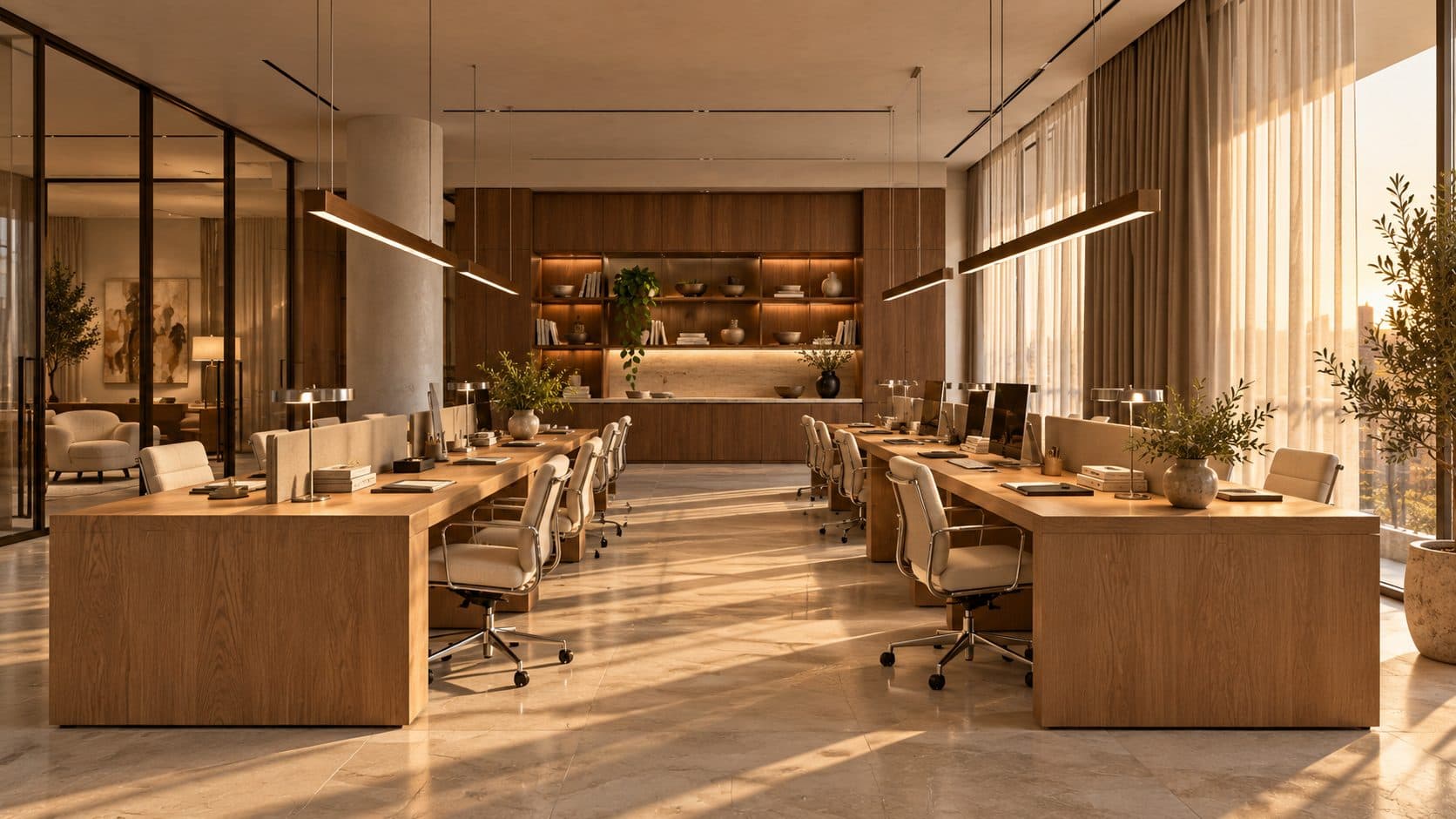
Illustration generated with AI. Not a POA project.
In this article · 9 chapters
- 01Why Dubai offices have a glare problem, not a light problem
- 02Start with orientation and the plan
- 03Layer the window treatments
- 04Ambient light: soft, indirect and even
- 05Task and accent light where people work
- 06Colour temperature and colour rendering
- 07Controls: let the light follow the day
- 08Planning the lighting with the interior
- 09Frequently asked questions
Lighting an office in Dubai is mostly about controlling daylight, not adding more of it. Place desks so people sit side-on to the windows, layer a sheer blind for glare with a dim-out blind for low sun, and keep bright sky out of screens. Then add artificial light in layers: soft ambient light, task light at the desk and accents on walls and joinery.
Why Dubai offices have a glare problem, not a light problem
Most office towers in Dubai have large glazed façades and strong sun for much of the year. That brings a lot of daylight in, but it rarely arrives as even, comfortable light. Near the glass it is too bright and too contrasty; towards the core of a deep floor plate it fades quickly.
The result is familiar: blinds pulled down all day, every ceiling light switched on, and people squinting at screens that reflect the sky. The aim of a lighting design is to keep the useful part of daylight, the view and the sense of time passing, while removing the glare and heat that make people close everything.
Start with orientation and the plan
Before choosing a single fitting, look at where the sun comes from. In the UAE, east- and west-facing façades take low, direct sun in the morning and afternoon, which is the hardest to control because it comes in nearly horizontally. South-facing glass gets high sun for much of the day, which deep window reveals, fins or overhangs can partly shade. North-facing glass gives the softest, most even daylight.
Use that in the layout:
- Desks side-on to the windows. Facing the glass puts bright sky behind the screen; sitting with your back to it puts the reflection on the screen. Side-on avoids both.
- Desks set back from the façade on low-sun elevations, with circulation, lounges or plants along the glass.
- Meeting rooms and screens placed where you can black them out without darkening the whole floor.
- Quiet, screen-heavy work towards the softer light; collaboration and breakout spaces where the light is brightest.
This is the same planning logic we use for acoustics in open-plan offices: sort activities by what they need, then let the plan do most of the work.
Layer the window treatments
One blind rarely does the whole job. Two layers on the same window usually work better:
- A sheer or screen blind that cuts brightness and glare while keeping the view. The openness of the fabric and its colour both matter: darker screen fabrics tend to preserve the view better, while lighter ones look softer from inside.
- A dim-out or blackout layer for low sun, presentations and video calls.
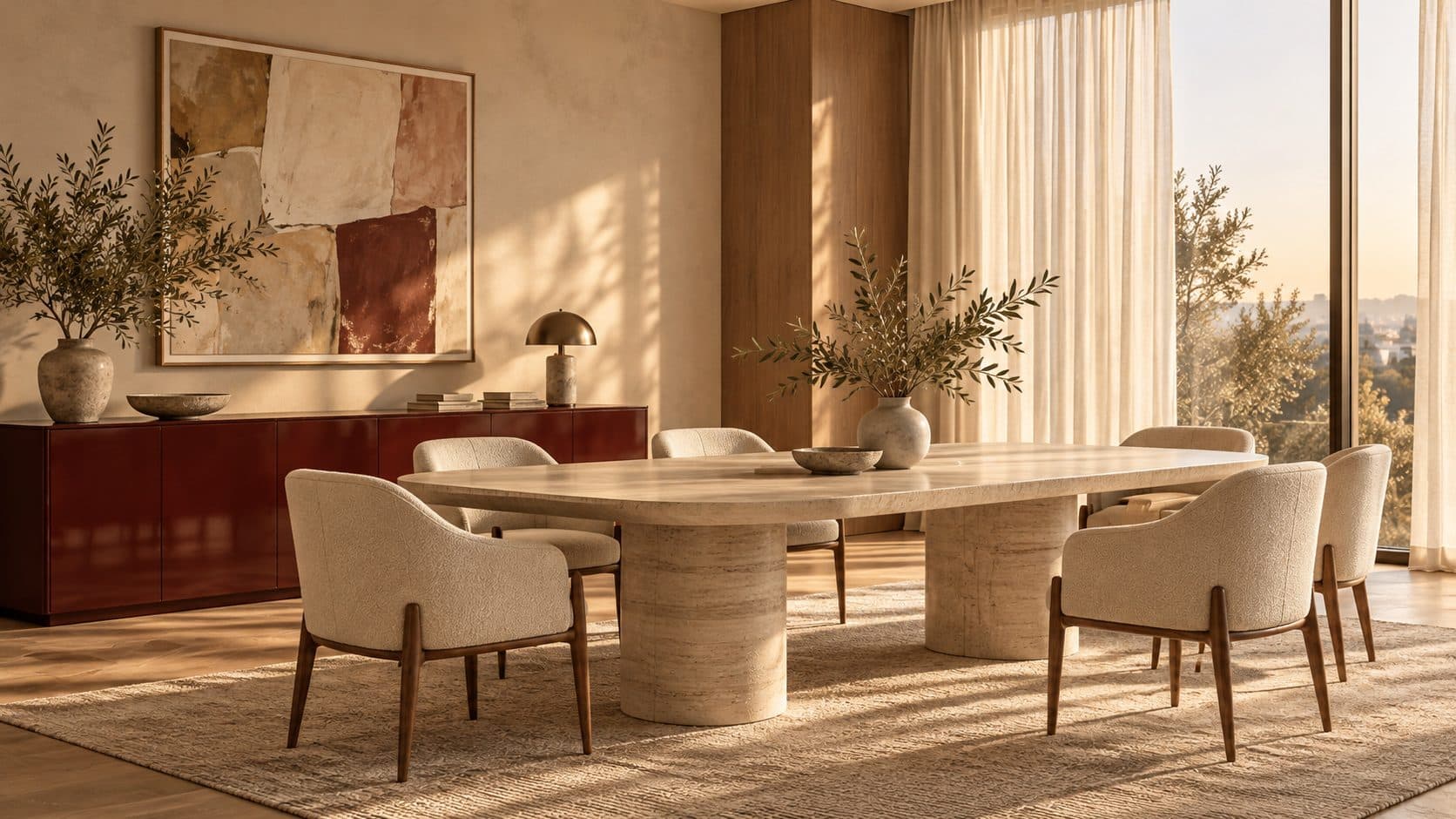
Curtains in a light linen or sheer weave, like the one in the cover image, can replace the first layer in executive offices, boardrooms and lounges, and they soften the acoustics too. Motorised blinds are worth considering on large or hard-to-reach windows, especially if they can be grouped by façade and lowered together.
Many towers control the type, colour and position of blinds visible from outside, and some do not allow films applied to the glass. Check your building's fit-out guide before specifying anything at the façade.
Ambient light: soft, indirect and even
Once daylight is under control, the artificial lighting can be calmer. The ambient layer is the general light that lets people move around and see each other's faces. It works best when it is indirect or well diffused:
- Linear fittings recessed into the ceiling, with good glare control so you never look straight into a bright source.
- Coves and uplights that bounce light off the ceiling.
- Light washed down walls and joinery, which makes a room feel brighter than the same amount of light pointed at the floor.
Many offices are handed over with a standard grid of ceiling fittings as part of the Category A fit-out. These can often be kept, swapped or supplemented; our guide to shell and core, Category A and Category B explains what the landlord usually provides and what your own fit-out changes.
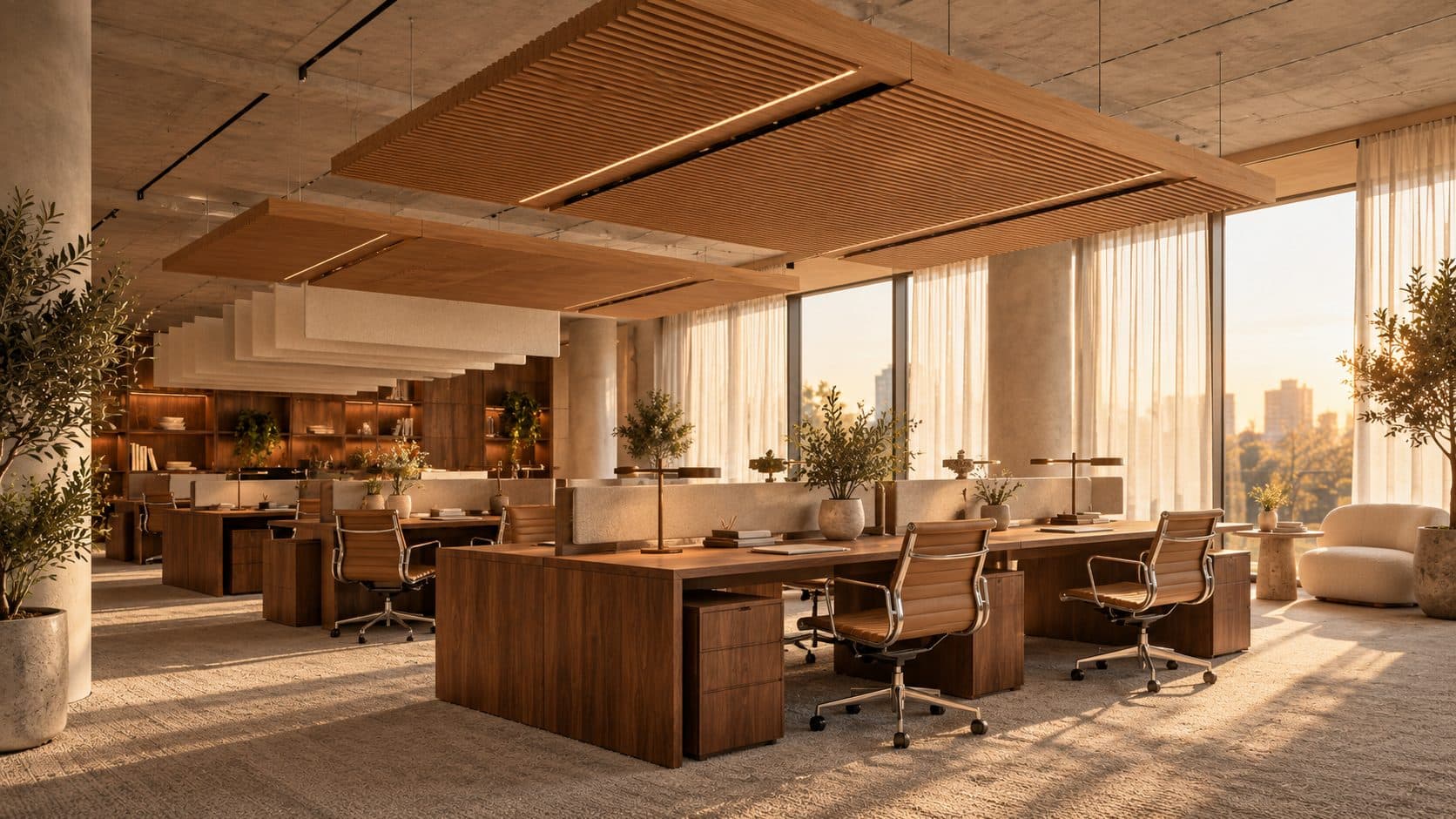
Where the design leaves the soffit exposed, the lighting is often hung from or built into suspended acoustic rafts over the desks; our guide to acoustic ceiling systems for open-plan offices explains how the two are planned together.
Task and accent light where people work
Ambient light alone is usually too flat for long hours at a desk. Add:
- Task lights at desks, adjustable so each person can add light to paper and keyboard without brightening the whole floor. On a bench desk, they can be integrated into the desk spine or screen.
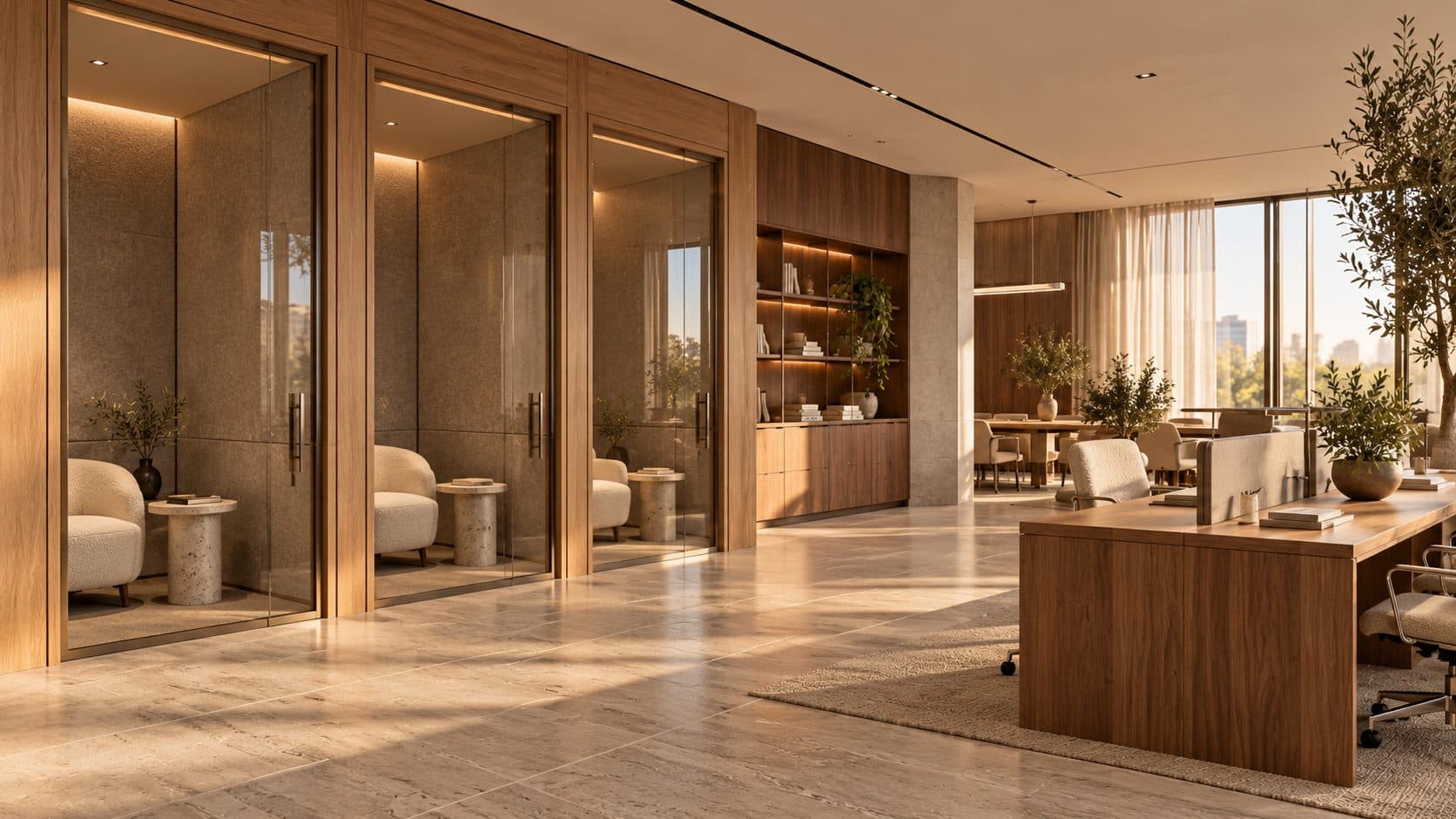
- Accent light in shelving, niches and storage walls, as in the walnut niche in the cover image. A strip concealed in joinery is one of the simplest ways to make an office feel warm in the evening.
- Pendants over tables in meeting rooms, pantries and lounges, hung low enough to define the table without blocking the view across it.
Lighting built into furniture has to be designed with the furniture: cable routes, drivers and access for maintenance. It is one of the reasons we design bespoke office furniture and lighting together rather than one after the other.
Colour temperature and colour rendering
Keep the colour temperature consistent across a space. Mixing warm and cool white in the same room looks accidental and makes materials read differently from one corner to the next. Warm or neutral white tends to suit timber, stone and textile interiors; very cool white can make walnut look grey and skin look tired.
Colour rendering matters as much as colour temperature. Fittings with a high colour rendering index show timber grain, leather and fabrics as they really are, which is what makes a warm, material-led office look the way it did on the sample board.
Controls: let the light follow the day
The best lighting scheme can be undone by a single switch that turns everything on at full output. Consider:
- Separate circuits for the perimeter zone near the glass and the inner zone, so perimeter lights can be dimmed when daylight is strong.
- Daylight and occupancy sensors, where the building and budget allow, to dim or switch lights automatically.
- Simple scenes for meeting rooms and boardrooms: presentation, call, meeting.
Electrical and lighting changes are part of the drawings the building and authorities review, so they need to be decided early. Our office fit-out timeline shows where they sit in the programme.
Planning the lighting with the interior
Lighting is not a layer you add at the end. Desk positions, blinds, ceilings, joinery and materials all depend on it, which is why we treat it as part of office interior design in Dubai from the first layout. If you are planning a private office, our guide to executive office design for video calls goes into the light on your face in more detail.
A well-controlled window is also the starting point for bringing nature indoors, as we explain in our guide to biophilic office design.
If your office is too bright at the window and too dim at the core, tell us about your space.
Frequently asked questions
How do you reduce glare in an office with large windows?
Turn desks side-on to the glass, set them back from low-sun façades, and use a sheer or screen blind that cuts brightness while keeping the view. Add a dim-out layer for low sun and screens, and check the building's rules on blinds and films first.
What type of blinds are best for offices in Dubai?
Usually two layers: a screen or sheer blind for everyday glare control and a dim-out or blackout blind for low sun, presentations and calls. Motorised blinds help on large windows. Many towers control the type and colour of blinds visible from outside, so confirm with building management.
What colour temperature is best for office lighting?
A consistent warm or neutral white across each space. Avoid mixing different colour temperatures in the same room, and choose fittings with good colour rendering so timber, stone and fabrics look as intended.
Should desks face the window in an office?
Usually not. Facing the window puts bright sky behind the screen, and sitting with your back to it causes reflections on the screen. Placing desks side-on to the windows gives daylight without glare.
Can I change the ceiling lights in a Category A office?
Usually yes, as part of your fit-out, but lighting and electrical changes need to be shown on the drawings submitted to the building and authorities for approval. Decide them early in the design so they do not delay the programme.