Walnut, oak or ash: choosing timber for office furniture
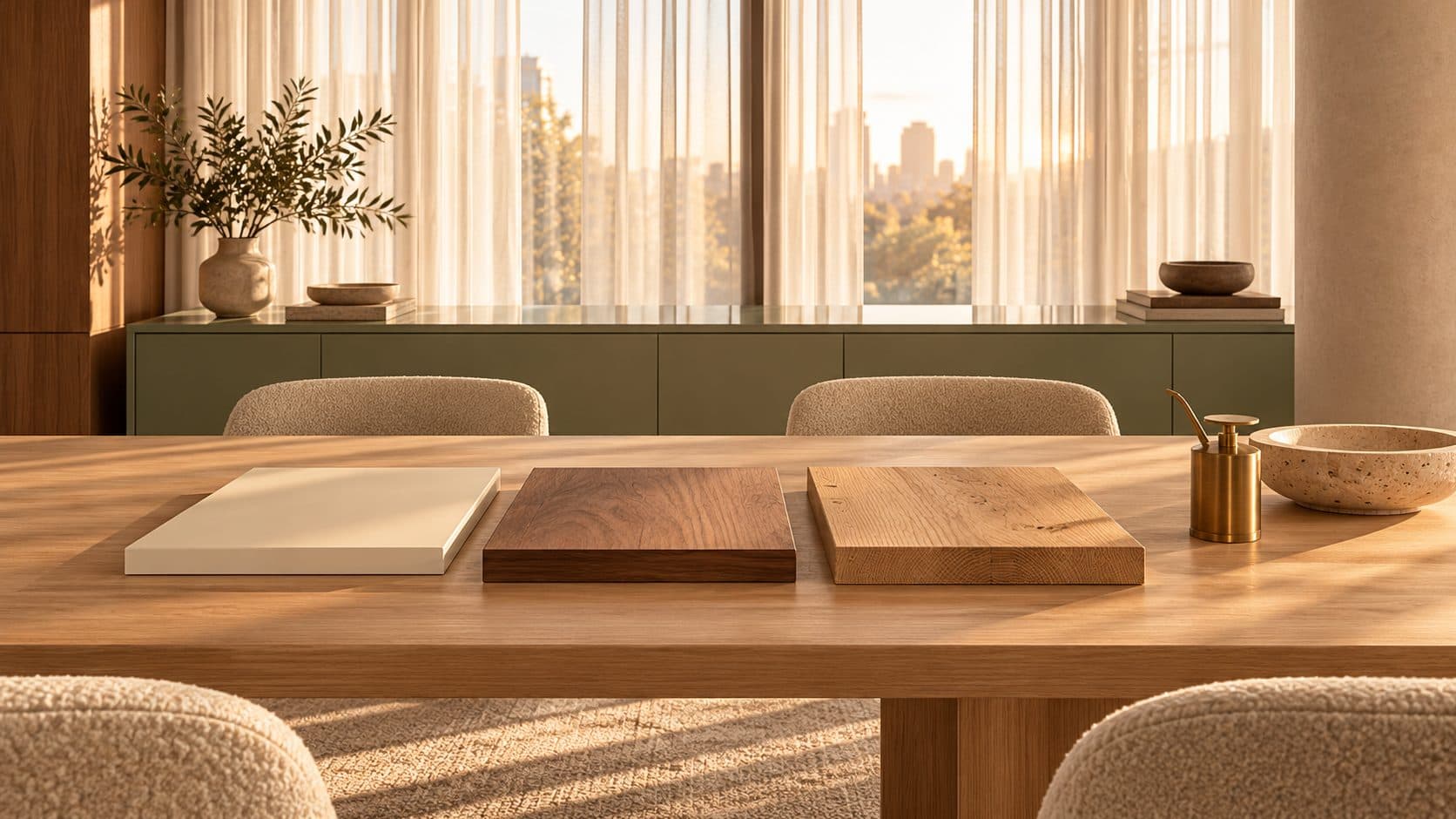
Walnut gives depth and warmth and suits executive rooms; oak is the hardest-wearing of the three and the safest choice for desks; ash is light, strong and keeps open floors bright. Pick one and use it throughout.
· Updated · 6 min read
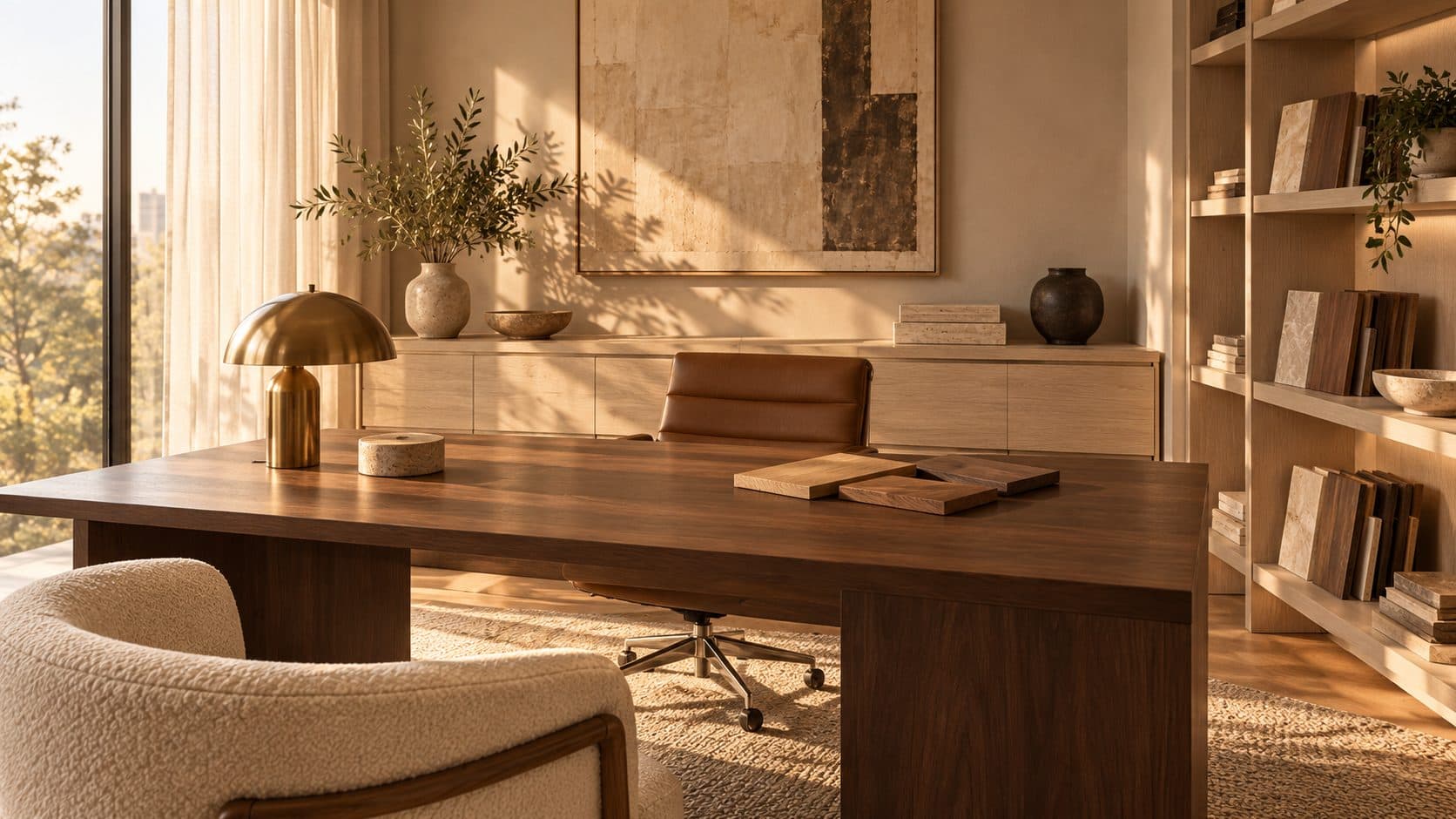
Illustration generated with AI. Not a POA project.
In this article · 9 chapters
- 01Why the choice matters more in an office than at home
- 02Walnut: depth, warmth and a little care
- 03Oak: the dependable one
- 04Ash: light, strong and often overlooked
- 05Solid or veneer
- 06Timber in strong sun and air conditioning
- 07Pairing timber with the rest of the palette
- 08How to choose: a short checklist
- 09Frequently asked questions
Choose walnut when you want depth and warmth in a boardroom, library or private office, and accept that it marks more easily than the paler timbers. Choose oak for desks, counters and anything touched all day, because it is the hardest-wearing of the three and easy to finish. Choose ash when the floor needs to stay light and the budget is tighter. Whichever you pick, use one timber throughout.
Why the choice matters more in an office than at home
In an office, timber is often the largest surface after the floor: a run of bench desks, a storage wall, a reception counter, the boardroom table and the doors. The species sets the colour temperature of the whole interior and decides how the furniture looks after years of use.
It also has to cope with strong low sun, all-day air conditioning and robust cleaning, so the decision is partly taste and partly how each timber behaves.
Walnut: depth, warmth and a little care
Walnut is the darkest of the three and the one most people associate with quality. Its colour runs from warm mid-brown to deep chocolate, and the grain gives a large surface movement without pattern.
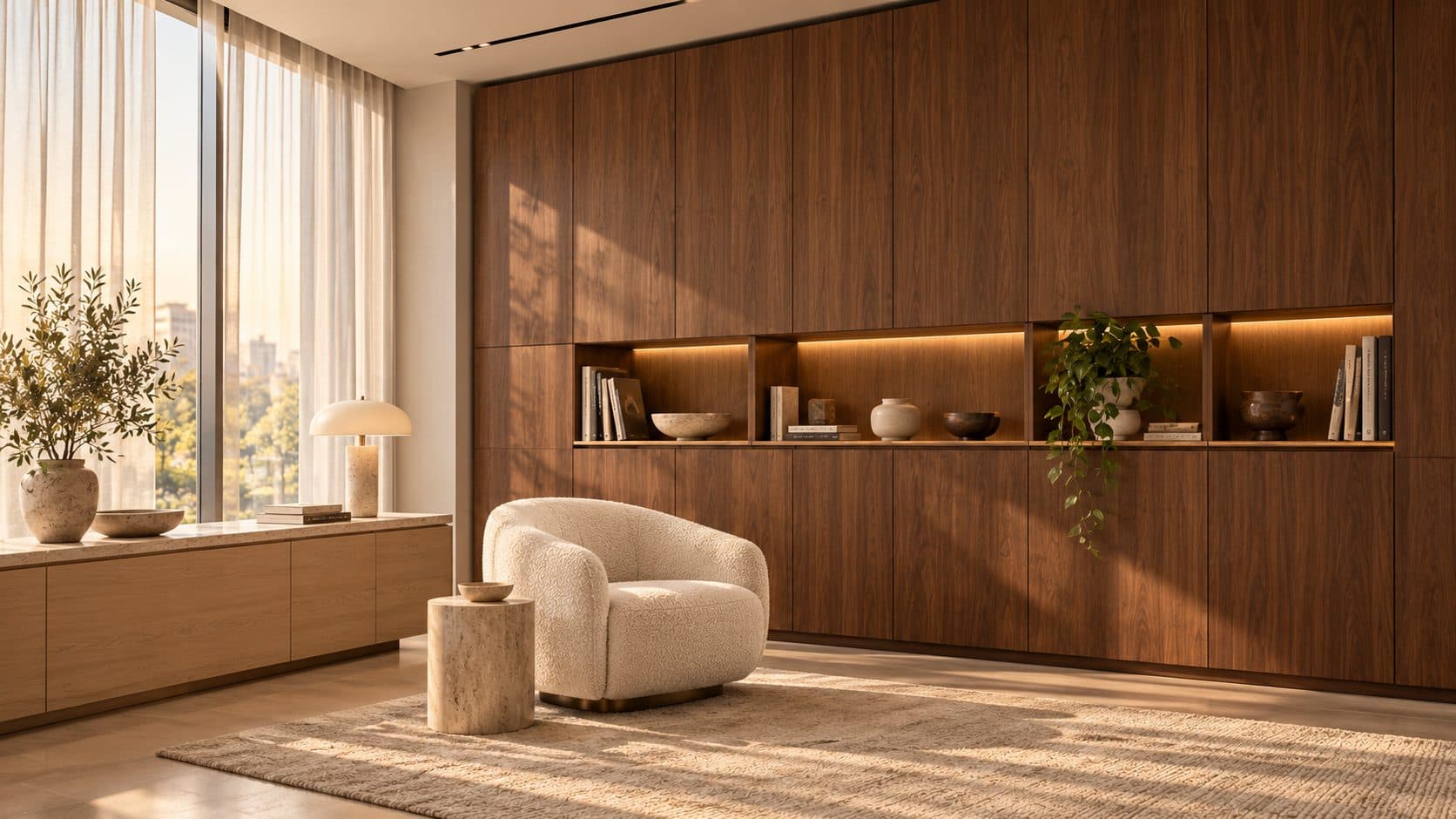
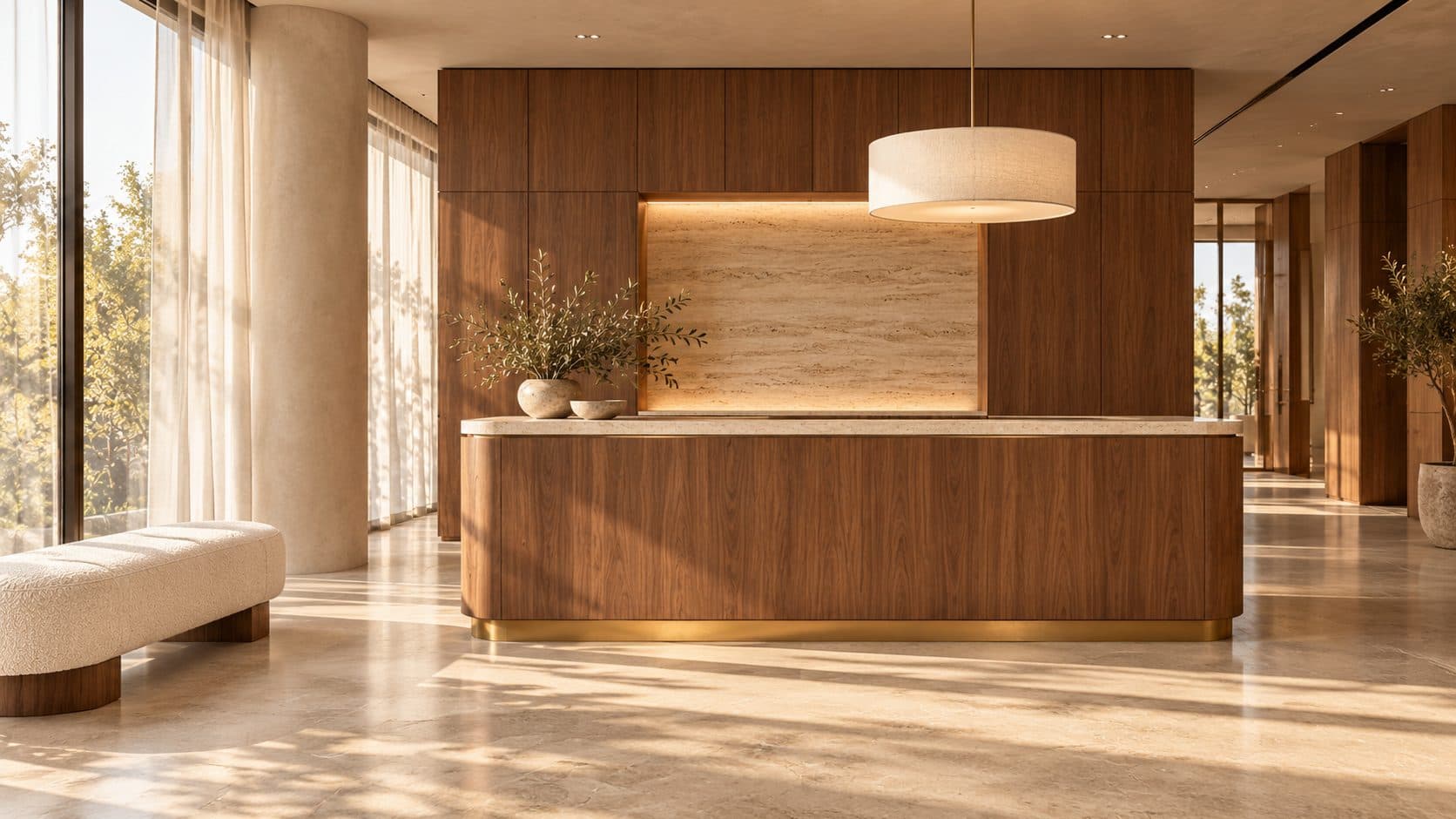
- Where it works. Executive offices, boardrooms, libraries and receptions, where the room is meant to feel considered and slightly formal. Our Walnut Gallery Office is built almost entirely on walnut, cream bouclé and travertine.
- How it wears. Walnut is softer than oak or ash, so a solid walnut top shows dents and fine scratches sooner. On surfaces used all day we usually specify walnut veneer on a stable core with a hard-wearing matte lacquer.
- How it ages. Walnut lightens over time, especially in direct sun, towards a warmer honey-brown, which shows most on a wall of joinery where one panel sits in sun and the next in shade. Our guide to lighting an office for Dubai's sun covers how to manage direct light.
- Cost. The most expensive of the three, in solid and in veneer, and consistent veneer leaves are harder to source for long runs.
Oak: the dependable one
Oak is the timber we specify most often for office furniture. It is hard, stable, widely available in solid and veneer, and takes almost any finish well. European and white oak are the usual choices.
- Where it works. Everywhere: desks, benches, counters, meeting tables, doors and panelling. It is pale enough to keep an open floor bright and warm enough not to feel clinical. Our Cobalt Headquarters uses light oak as the quiet background to one saturated accent.
- How it wears. Oak resists dents and scratches better than walnut, its open grain hides small marks, and a lacquered or oiled top can usually be refreshed rather than replaced.
- How it ages. Natural oak yellows gently, more so under clear lacquer and in sunlight. A white-pigmented or matte finish slows the shift, and oak takes stains and smoked finishes well.
- Cost. Mid-range, and the easiest to match across suppliers if furniture is added later.
Ash: light, strong and often overlooked
Ash is the palest of the three, with a straight, open grain similar to oak but a cooler, creamier colour. It is strong and slightly springy, and usually costs less than oak.
- Where it works. Open-plan floors and deep plates where daylight does not reach the core. Our Skyline Executive Suite pairs bench desking in light ash with travertine and sage.
- How it wears. Ash stands up well to knocks and suits desk and bench tops. It is slightly more porous than oak, so tops and edges want a sealed finish rather than a thin oil.
- How it ages. Ash yellows more visibly than oak under clear lacquer, and because it starts so pale the change is easier to see. A white-oiled or lightly pigmented finish keeps it close to its original colour.
- Cost. Usually the least expensive of the three; confirm availability early for long runs.
Solid or veneer
The question is less solid against veneer than where each belongs. Solid timber suits edges, legs, frames and small tops. Veneer on a stable core suits wide tops, long bench runs, doors and wall panels, where it stays flat in air-conditioned rooms and matches across many metres.
A good desk often combines the two: a veneered top with a solid edge of the same species, so the surface stays stable and the edge, which chairs and bags hit, can be sanded. The edge is where a piece shows its quality, which is why we draw it for every piece of bespoke office furniture rather than picking from a catalogue. For what goes on top of the timber, see our comparison of lacquer, veneer and solid wood finishes.
Timber in strong sun and air conditioning
Dubai offices are bright and dry, and both affect timber.
- Sunlight shifts colour. Walnut lightens, oak and ash yellow, and the change shows most where sun reaches part of a surface and not the rest. Keep large timber surfaces back from unshaded glazing and plan blinds with the furniture.
- Air conditioning keeps humidity low and steady, which suits timber once acclimatised. Movement is more likely during the fit-out than in daily use; veneered panels and solid edges are the usual protection.
- Cleaning matters as much as either. Matte lacquers resist most cleaning products; oiled finishes feel better but need re-oiling. Agree the finish with whoever will look after the office.
Pairing timber with the rest of the palette
Timber rarely stands alone. In our projects it sits with one stone and one textile. Walnut with travertine and cream bouclé reads warm and quiet; oak with honed grey stone and wool reads crisp; ash with pale stone and sage feels light and calm. Our materials guide for warm office interiors explains how to build a palette around one timber, and our article on choosing colours for an office covers how an accent colour sits against each.
Whatever the pairing, resist mixing two timbers in one room: walnut doors beside oak desks look like two decisions. For contrast, use a second finish of the same species, a stone, a lacquer or a metal.
How to choose: a short checklist
- What should the room feel like? Formal and warm points to walnut; bright and calm points to oak or ash.
- How hard will the surfaces be used? Desks, counters and tables touched all day favour oak, or lacquered veneer in any species.
- How long are the runs? Long benches and storage walls need consistent veneer; oak is easiest to match, walnut hardest.
- What is the budget? Ash, then oak, then walnut, with veneer narrowing the gap.
We draw the furniture with the interior, so timber, stone, lighting and layout are decided together. If you are weighing up the timber for your desks, counters or joinery, tell us about your space.
Frequently asked questions
Which wood is best for an office desk?
Oak is the safest choice for a desk used all day: it is harder than walnut, hides small marks and is easy to refinish. Walnut looks richer but marks more easily, so it suits a lacquered veneer top. Ash is a strong, paler alternative that usually costs less.
Is walnut too soft for office furniture?
No, but it needs the right construction. Solid walnut tops show dents and fine scratches sooner than oak, so for desks and counters we usually use walnut veneer on a stable core with a matte lacquer.
Does oak furniture turn yellow?
Natural oak warms and yellows gradually, more so under clear lacquer and in direct sunlight. A white-pigmented or matte finish slows the change. Ash behaves similarly and, being paler, shows the shift more.
Can I mix walnut and oak in the same office?
It is better not to mix them in one room, because two timbers read as two decisions. Use one species throughout and create contrast with a second finish of the same timber, a stone, a lacquer colour or a metal.
Is veneer lower quality than solid wood for office furniture?
Not for wide, flat surfaces. Veneer on a stable core stays flatter than solid timber in air-conditioned rooms and matches across long bench runs and doors. The best pieces combine a veneered top with a solid edge of the same species.