Luxury office interior design in Dubai: what luxury actually means
A luxury office is not the one with the most marble. It is the one where the materials are real, the proportions are generous, the details are resolved and the room is quiet. This guide sets out what to ask for, and what to leave out.
· 8 min read
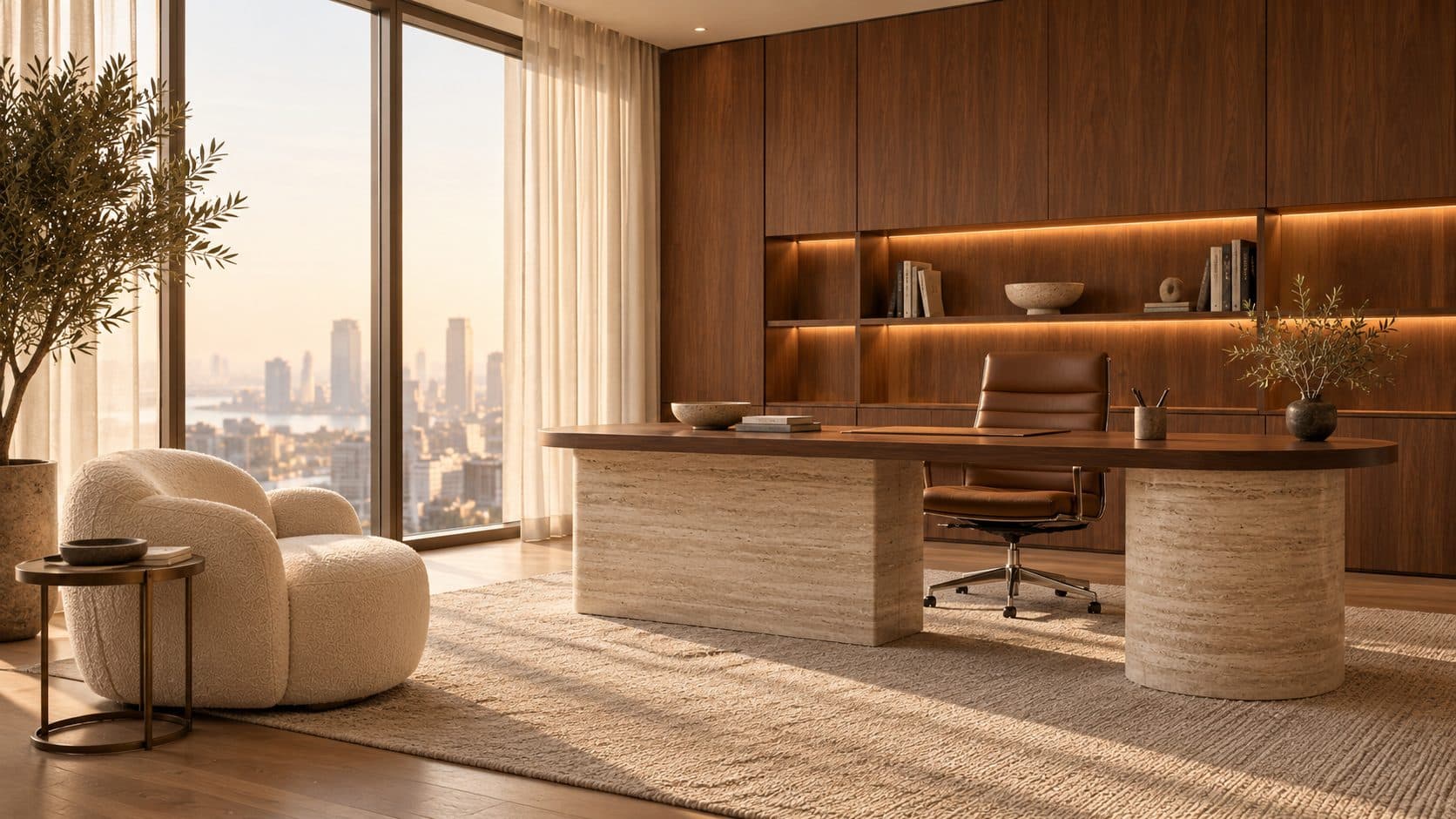
Illustration generated with AI. Not a POA project.
In this article · 9 chapters
- 01Luxury is in the hand, not in the photograph
- 02Space is the most expensive material
- 03The details that separate luxury from expensive
- 04Light: control first, then warmth
- 05Quiet is a luxury that nobody photographs
- 06Bespoke pieces where they count
- 07What luxury is not
- 08Briefing for a luxury office
- 09Frequently asked questions
A luxury office in Dubai is defined by what you touch, how much room you are given and how carefully the details are resolved, not by how much polished stone is on show. The offices that feel expensive share a few things: real materials used honestly, generous proportions, joints and hardware that have been thought about, light that is controlled and rooms that are quiet. This guide explains each of them, so that the word on your brief turns into decisions rather than a mood board.
Luxury is in the hand, not in the photograph
Most people recognise a luxurious room within seconds, and little of that recognition comes from the floor. It comes from the weight of the door, the temperature of the handle, the sound the room makes when it closes and the surface under your palm at the desk.
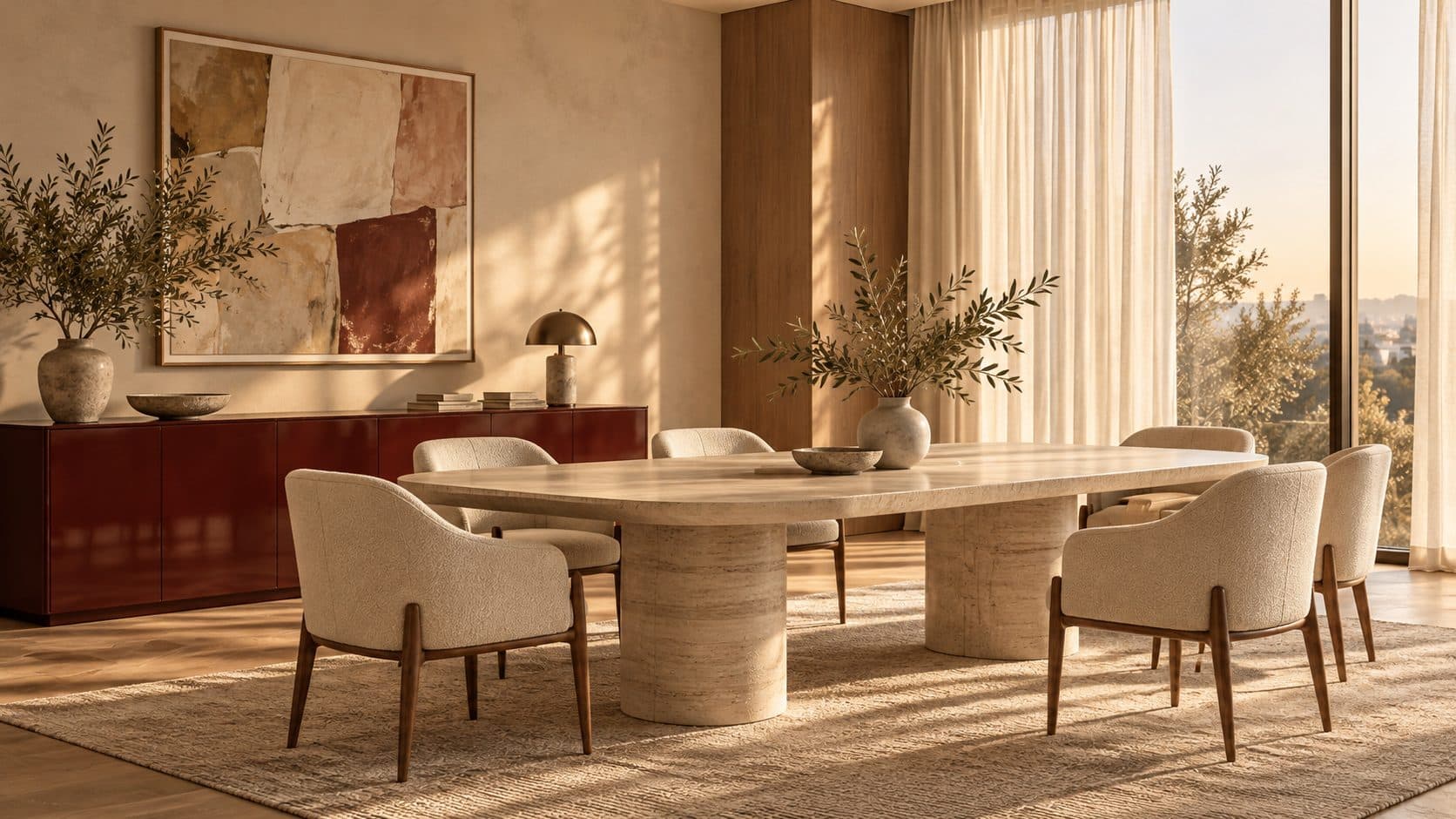
So the first decision is material honesty: solid timber where a hand rests, real stone where a tray is put down, wool and bouclé where people sit, metal that is actually brass, bronze or steel rather than a coating that wears through at the touch points. Three or four such materials, used consistently, read as considered; ten imitations read as a showroom, however glossy the renders were. Our materials guide to warm office interiors explains how we keep the palette short and why.
The test is simple: for every surface within reach, ask what it is made of and how it will look after years of hands, bags and cleaning. Veneer and lacquer have their place, but they belong on the surfaces that are seen rather than handled; our guide to lacquer, veneer and solid wood sets out where each one works.
Space is the most expensive material
In a city where rents are set per square foot, the clearest signal of luxury is space that has not been filled: a reception with room around the counter, a corridor wider than the code requires, a boardroom where chairs pull out without touching the wall, a private office with a seating group as well as a desk.
This is a brief decision before it is a design decision. If headcount and floor plate are fixed, generosity has to come from somewhere: fewer enclosed rooms, shared storage instead of a cupboard per person, a smaller pantry that is better detailed. Make those trade-offs deliberately in the brief to your interior designer rather than at the drawing stage.
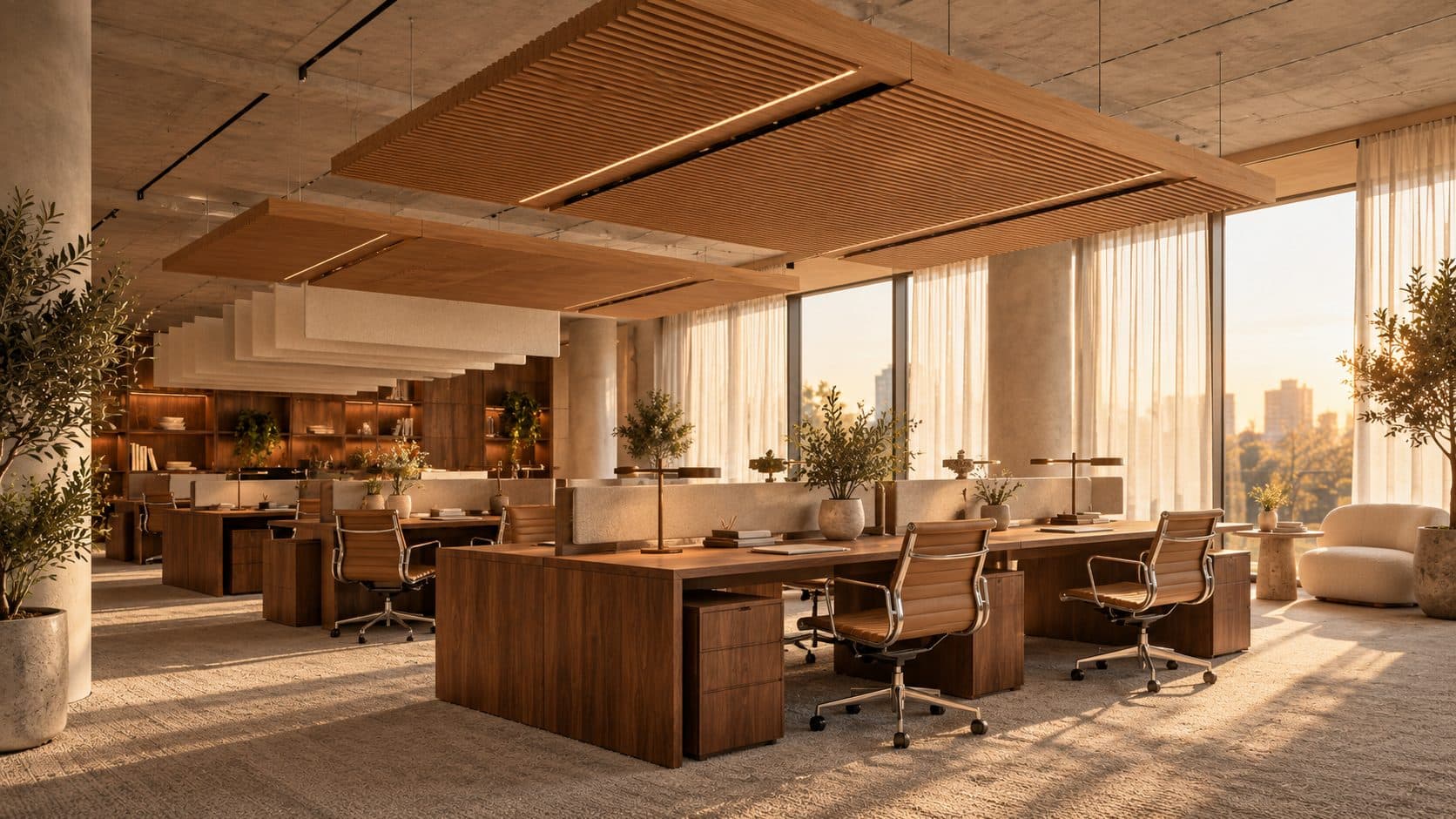
Proportion matters as much as area: generous openings, and few of them. Where a ceiling is low, a flush plaster finish with the services hidden gains more apparent height than any expensive floor. Our guide to acoustic ceiling systems for open-plan offices covers how the ceiling can carry absorption and lighting without a visible grid.
The details that separate luxury from expensive
Luxury is mostly resolution: every junction between two materials has been decided rather than left to the installer. The details worth insisting on are not exotic, but they take drawing time and a contractor who is held to them:
- Shadow gaps instead of skirtings and cornices, so that walls meet floors and ceilings in a clean line.
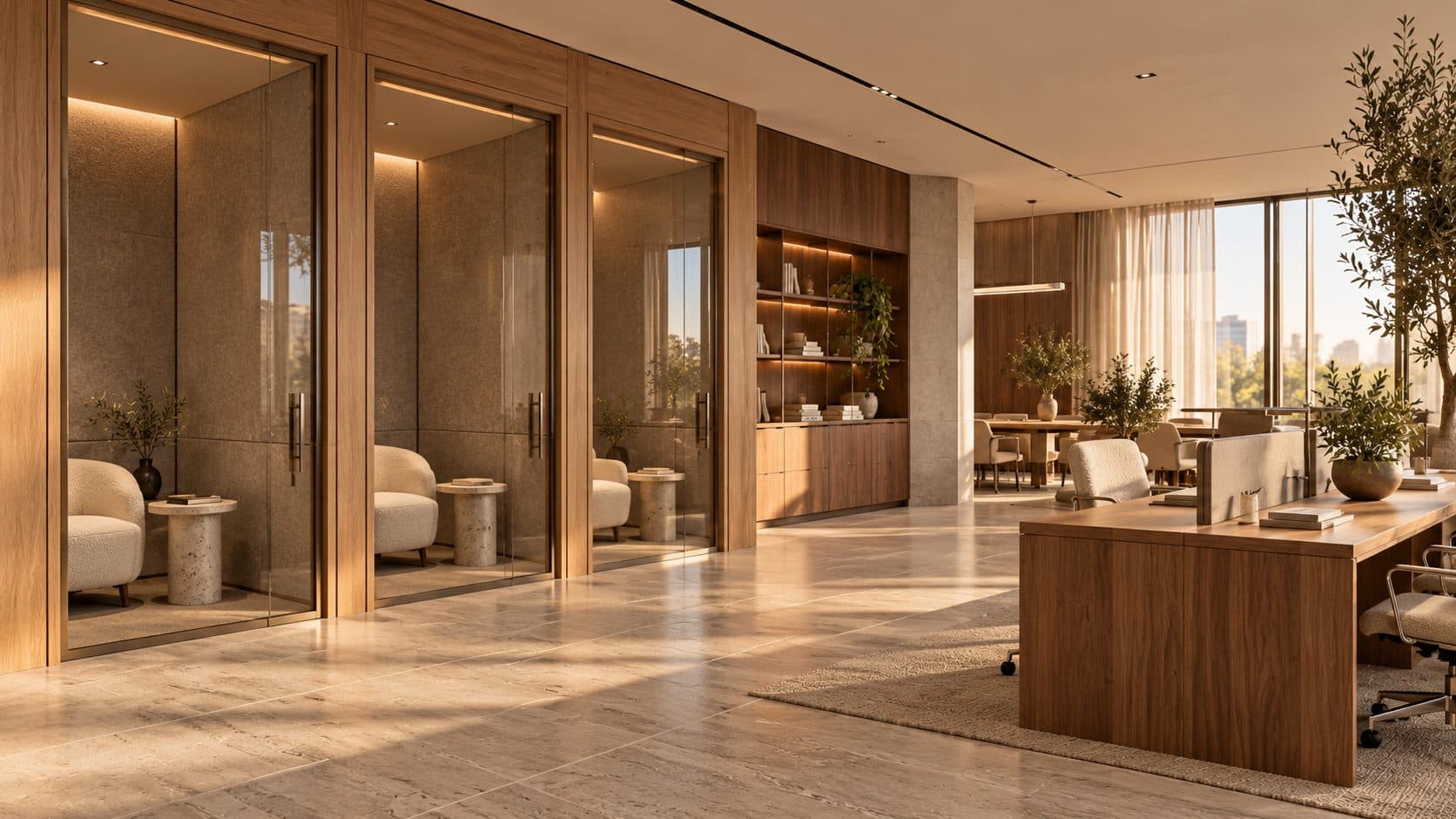
- Flush doors, full height where the ceiling allows, with concealed frames and hinges, so that a door reads as a panel in the wall. Our article on office storage walls shows how the same logic hides a whole wall of cupboards.
- Aligned joints: the panel lines of the joinery, the mullions of the glazing and the ceiling junctions set out on one grid, so that nothing lands on a half-module.
- Real hardware: handles, pulls and hinges in solid metal, one finish throughout the floor. Handles are touched more than anything else in the office.
- Edges and returns: stone tops with a worked edge rather than a sawn one; veneers that wrap the edge; upholstery that is tailored at the corners.
- Concealed services: sockets in the joinery, screens flush in the wall, cables that never cross a surface. Our guide to executive office design for video calls covers how the desk, credenza and wall behind are planned so that nothing is on show.
None of these cost much in materials. They cost attention, which is what the fee buys. The Bronze Private Office shows the principle at full scale: continuous walnut panels hide the storage and the doors, so that only a few brushed steel pieces read as furniture.
Light: control first, then warmth
Dubai gives most offices more daylight than they can use, and the luxurious response is to manage it rather than block it. Sheer curtains in heavy linen or wool, rather than roller blinds, soften the glare and move the light around the room; blackout where screens demand it is a second, concealed layer. Our guide to office lighting in Dubai covers glare, blinds and layering in detail.
Artificial light is warm, dimmable and placed on surfaces rather than scattered from the ceiling. Light inside the joinery, a wall grazed from a concealed slot, a lamp on the credenza and a pendant over the meeting table do more for a room than a grid of downlights. The fittings should be nearly invisible; the effect should not be.
Quiet is a luxury that nobody photographs
The most underrated quality of a high-end office is silence: doors that seal, partitions that go to the slab, soft surfaces in the right places, and two people able to talk at a desk without being heard in the next room. Visitors notice it even if they cannot name it, and senior people notice it every day.
In a private office or boardroom that means acoustic doors with drop seals, glazing specified for sound as well as light, and absorption hidden in the ceiling, the joinery and the upholstery rather than added as panels afterwards. In the open areas it means layout before product; our guide to open-plan office acoustics explains how storage, soft furniture and the ceiling do the work without visible acoustic treatment.
Bespoke pieces where they count
A luxury office does not need every piece made for it. It needs the pieces that define the rooms made for them: the reception counter, the boardroom table, the executive desk and the storage joinery. These set the proportions and carry the materials, and a catalogue piece in the wrong size or finish undoes everything around it.
The Skyline Executive Suite is organised around a sculpted travertine desk, and the Walnut Gallery Office around backlit walnut library walls that carry the lighting and the display; in both, one bespoke element gives the rest of the room its measure. Chairs, lounge seating and task lighting can then come from manufacturers who make them better than any joiner. Our article on reception counter design goes into one of these pieces in detail, and our bespoke office furniture page explains how we design and make the others.
What luxury is not
A few things are often sold as luxury and usually work against it:
- Book-matched marble on every vertical surface. One stone, used where it is touched or carries the room, is more convincing than a lobby's worth.
- Gold-toned finishes on everything. A single warm metal, repeated with discipline, reads as a decision; several read as a catalogue.
- High-gloss everything. Gloss shows every fingerprint and every flaw in the substrate. Honed stone, matt timber and brushed metal age better.
- Feature walls and logos. The brand belongs in the quality of the space and one quiet gesture at the reception; our article on reception design covers what the first ten metres should do.
- Furniture scaled for a hotel lobby. Oversized sofas and desks make a room feel smaller.
The common thread is restraint: luxury leaves things out.
Briefing for a luxury office
When you write the brief, replace the word "luxury" with the qualities you actually want: a short palette of real materials; generous circulation and one room with a seating group; flush, aligned detailing with concealed services; warm, dimmable light and control of the sun; acoustic privacy in every enclosed room; bespoke pieces for the reception, boardroom and executive offices. Then ask to see how each is drawn, not just rendered.
This is how we approach office interior design in Dubai: warm, material-led rooms designed from the hand outwards, with the drawings and site attention the details demand. If you are planning an office that has to feel as good as it looks, tell us about your space and we will start with the materials and the plan.
Frequently asked questions
What makes an office interior "luxury" rather than just expensive?
Resolution rather than cost. A luxury office uses a short palette of real materials where people touch them, gives its rooms generous proportions, resolves every junction with shadow gaps, flush doors and aligned joints, controls daylight with layered curtains and warm dimmable light, and keeps its enclosed rooms quiet. An expensive office can have all of the materials and none of the discipline.
Which materials are typical of luxury office design in Dubai?
Walnut, oak and ash in solid or sequenced veneer, travertine and other honed stones, wool and bouclé upholstery, cognac leather, brushed bronze, brass or stainless steel, and linen or wool sheers at the windows. The choice matters less than the restraint: three or four materials used consistently across joinery, furniture and finishes.
Does a luxury office need bespoke furniture?
Not everywhere. The pieces that set the proportions and carry the materials, usually the reception counter, the boardroom table, the executive desks and the storage joinery, are worth making for the room. Seating, task chairs and lighting are generally better bought from manufacturers who specialise in them and chosen to sit quietly beside the bespoke work.
How do you make a luxury office feel calm rather than showy?
Leave things out. One stone, one warm metal, one timber; matt and honed finishes instead of gloss; no feature walls or oversized logos; light on surfaces instead of a grid of downlights; and acoustic privacy that lets the rooms stay quiet. Space that has not been filled is the strongest signal of all.
How should I brief a designer for a luxury office in Dubai?
Replace the word with qualities: a short palette of real materials, generous circulation, one room with a seating group, flush aligned detailing with concealed services, warm controllable light, acoustic doors and partitions, and a list of the pieces to be made bespoke. Ask to see how the details are drawn, and confirm early with building management what the building's fit-out guide allows for ceilings, partitions and glazing.